

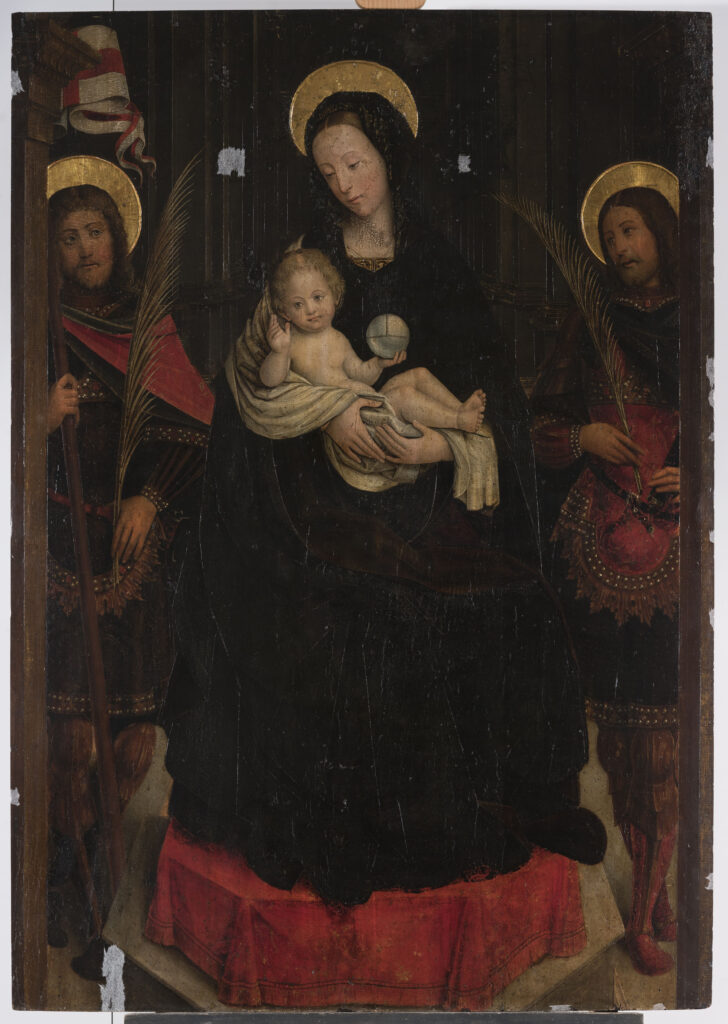
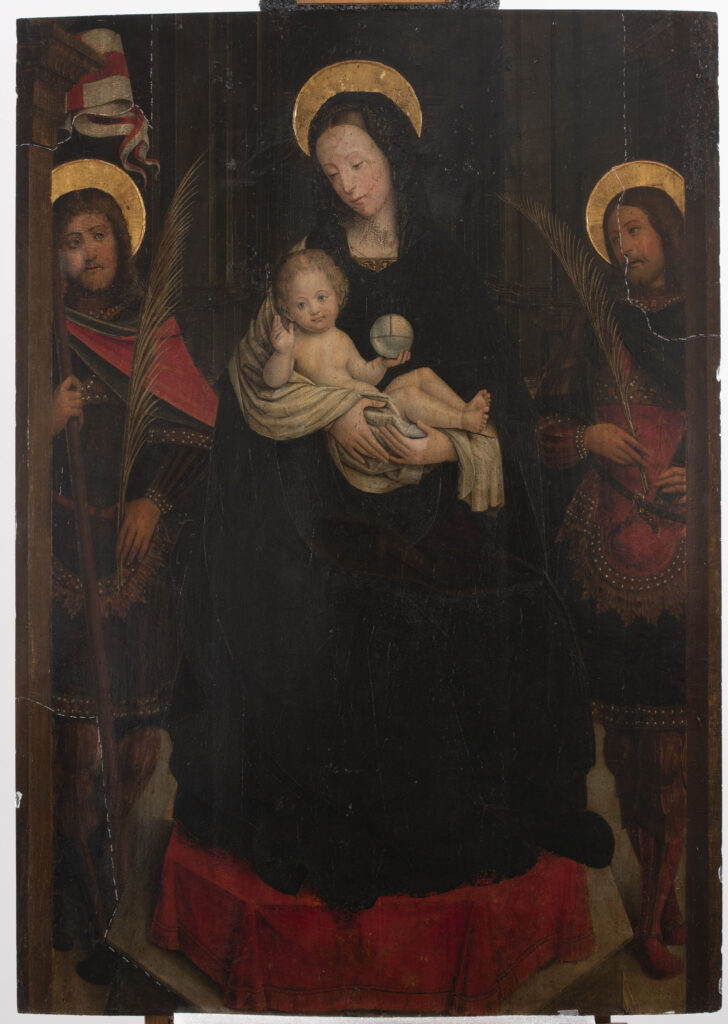
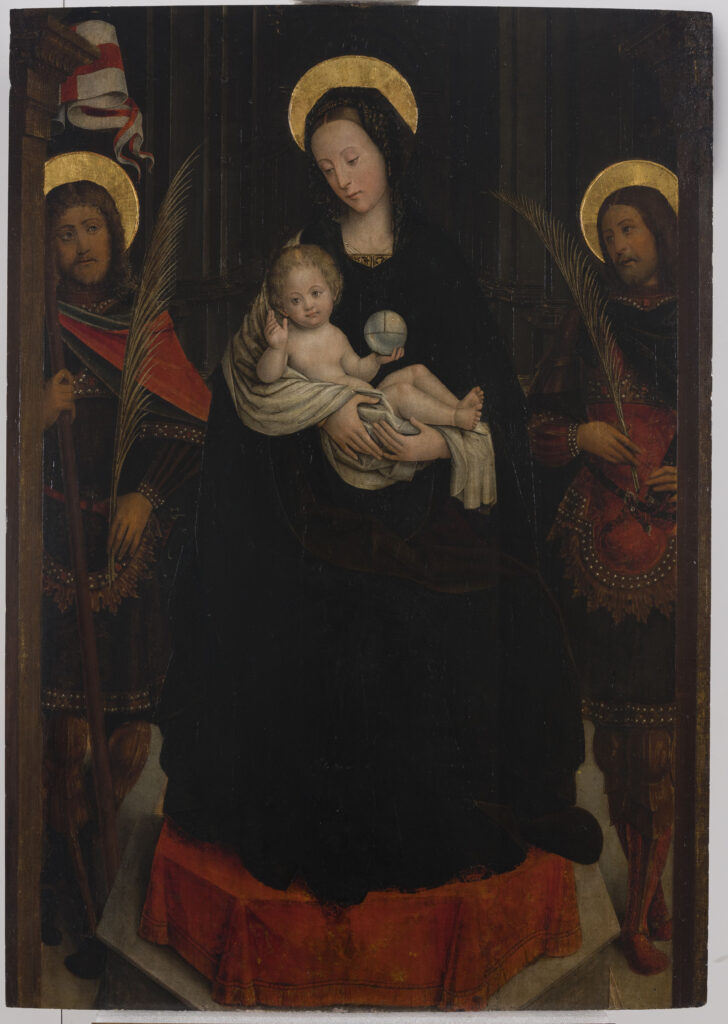
Madonna Enthroned with Child between Two Holy Martyrs
Defendant Ferrari
Brief description of the intervention
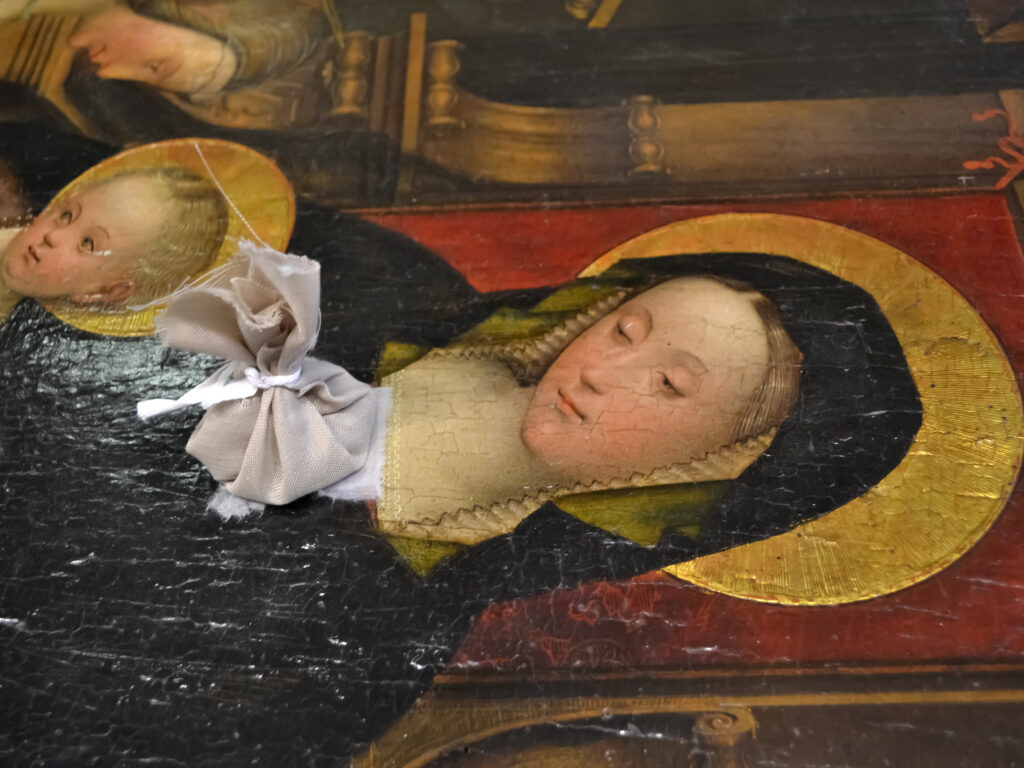
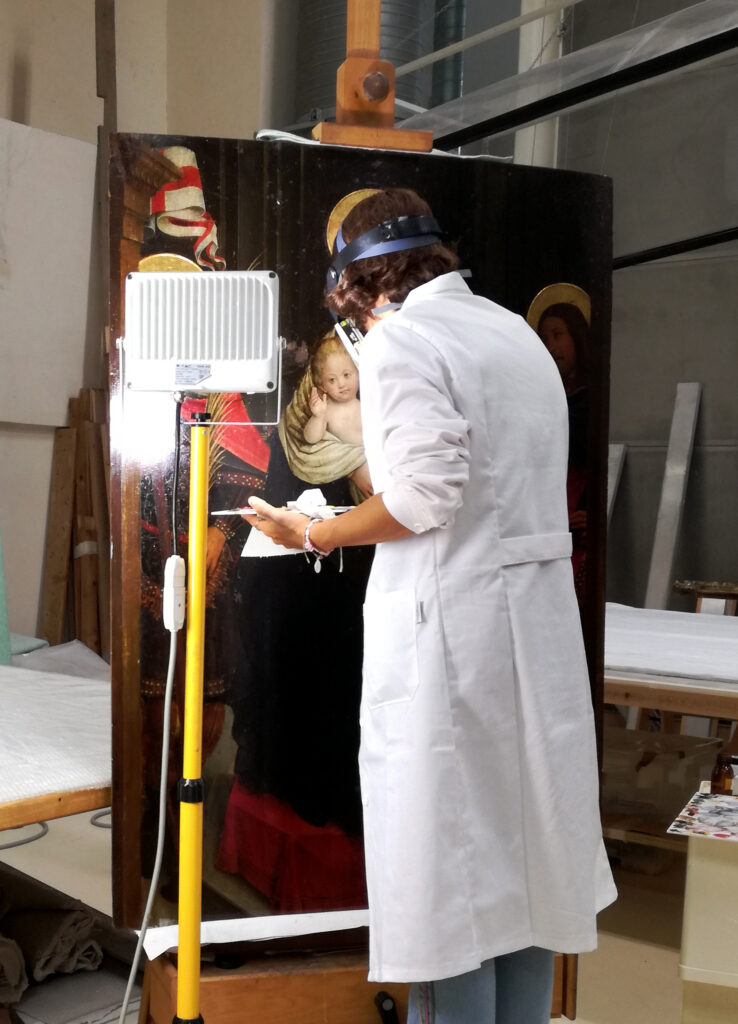
The restoration work carried out by the Centre between 2018-2019 and the subsequent exhibition from 2022 made it possible to successfully bring the painting back to the attention of the public and scholars, as part of a demanding project to learn about and preserve the works of Ferrari and Gerolamo Giovenone launched by the Centre in 2014 with the support of the Compagnia di San Paolo.
The Carmagnolese relevance of the table has been attested since 1836, when, identified as Our Lady of Grace, is still judged to be ‘of great value’ and to be particularly venerated in one of the main chapels of the church, belonging to the Cavassa di Saluzzo.
Its realization took place in the first decade of the sixteenth century, in the context of that flourishing pictorial workshop operating between Turin and Chivasso in which Defendente confronted and collaborated with his master, Giovanni Martino Spanzotti.
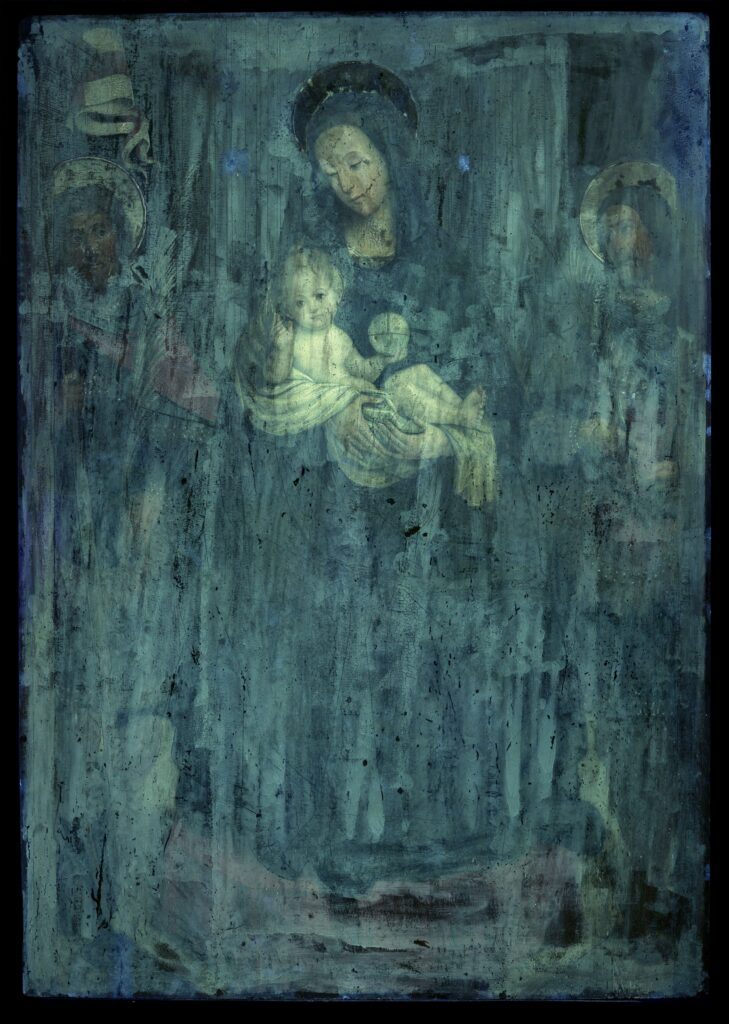
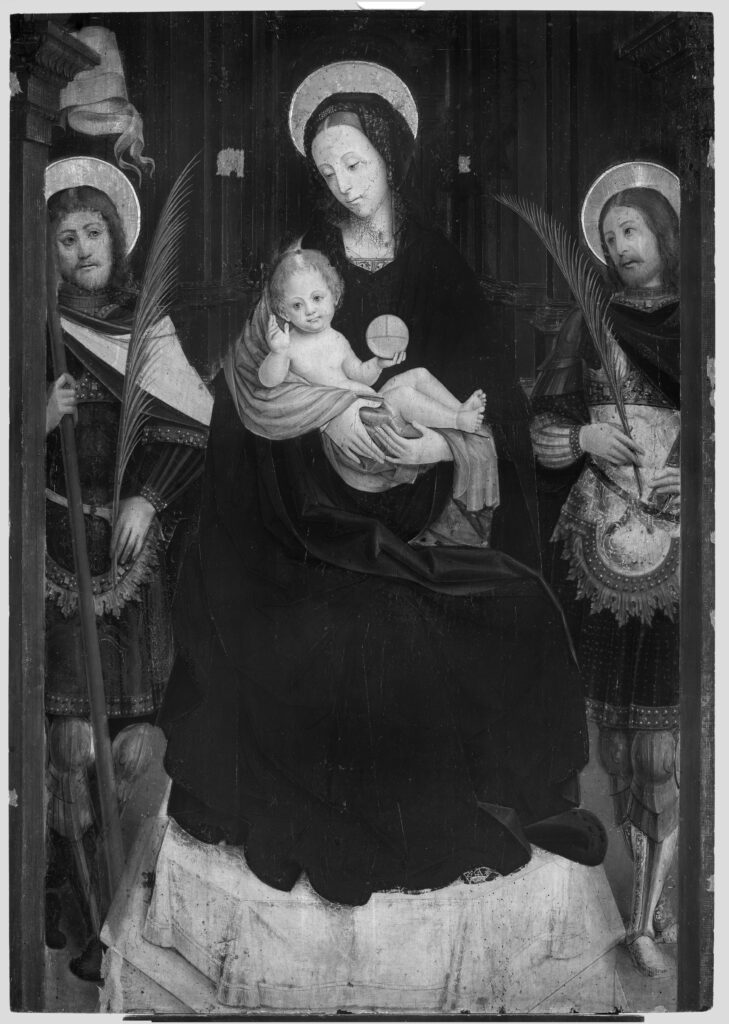
Scientific analysis and restoration provided significant data to better understand the ancient conformation of the painting. Technical and iconographic data allow us to confirm the sharp reduction suffered by the painting both in the lower and upper part: It therefore had to have a much more vertical shape than it appears today, supporting the hypothesis that it could originally constitute the central compartment of an altarpiece.
The Central Group of the Madonna and Child It follows a model repeated several times by the artist, confirming the desire to propose traditional and obviously successful compositional solutions through the availability of drawings that certainly circulated within the workshop.
The non-invasive diagnostic campaign and the analysis on micro-samples provided precise data for the recognition of the different pictorial binders (flax oil, egg, animal glue) and pigments often used in mixture by the artist or superimposed for veiling: blue, indigo, copper-based mineral greens, red lacquers, cinnabar, red and yellow ochres, gold, yellow, Naples yellow, lead white and bone black.
As in other Defendente’s works, even in Carmagnola’s panel some backgrounds are obtained with a particular technique which, probably through the use of a mouth airbrush and a very diluted colour, allowed the artist to spray the pigments for a particular rendering of volumes and moulded: The ‘spray’ effect is particularly evident in the nuance of the incarnates.

 CCR and accessibility


