

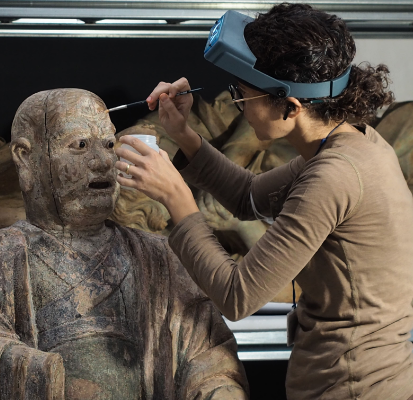
Laboratory activities focus on study and research projects, collaborating with educational activities and using cleaning techniques with LASER instrumentation.
Over the years, there have been collaborations with the territory and the earthquake-stricken areas of Umbria, working on late medieval and Renaissance devotional sculptures.
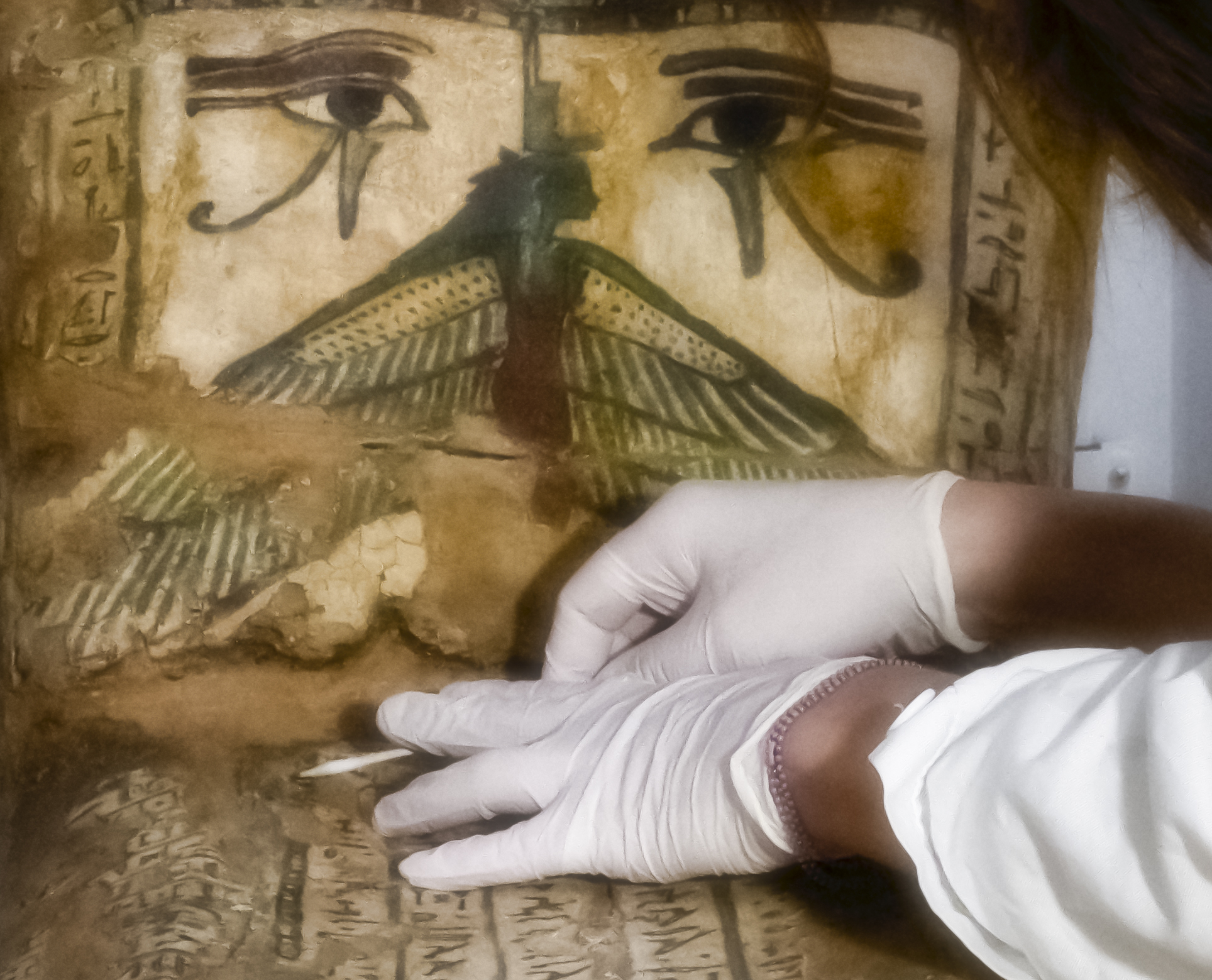
A specialization of the laboratory is the study and conservation of Egyptian polychrome wooden artifacts. Thanks to the international Vatican Coffin Project, the Centre has developed expertise on the techniques and materials of different types of sarcophagi and has created specific guidelines for conservation interventions.
Director of Laboratories
Michela Cardinali
Deputy Director of Laboratories
Roberta Genta
Area Manager and Coordinator
Paola Buscaglia
Laser Applications Technical Contact
Francesca Zenucchini
Art historian
Paola Manchinu
CASE STUDY
Polychrome wooden sarcophagi
Late Period (740-655 BC)
Turin, Egyptian Museum
As part of the collaboration with the Egyptian Museum, particular attention was paid to the study and treatment of the surface finishing layers of a group of 4 sarcophagus lids of the XXV-XXVI dynasty from the Ramesside tombs (Valley of the Queens, Luxor), which belong to 3 generations of the same family.
The case study was significant both technically and in terms of understanding the alterations of the materials, having found evidence of exposure to high heat, and made it possible to verify the effectiveness of the combination of LASER technology and chemical methods for cleaning the products. A research project is being developed with the aim of unveiling technical and technological aspects of the production of these sarcophagi and, above all, of the red finishes found.
CASE STUDY
Category: Works of Buddhist art
15th-18th century
Biella, Alberti La Marmora Collection
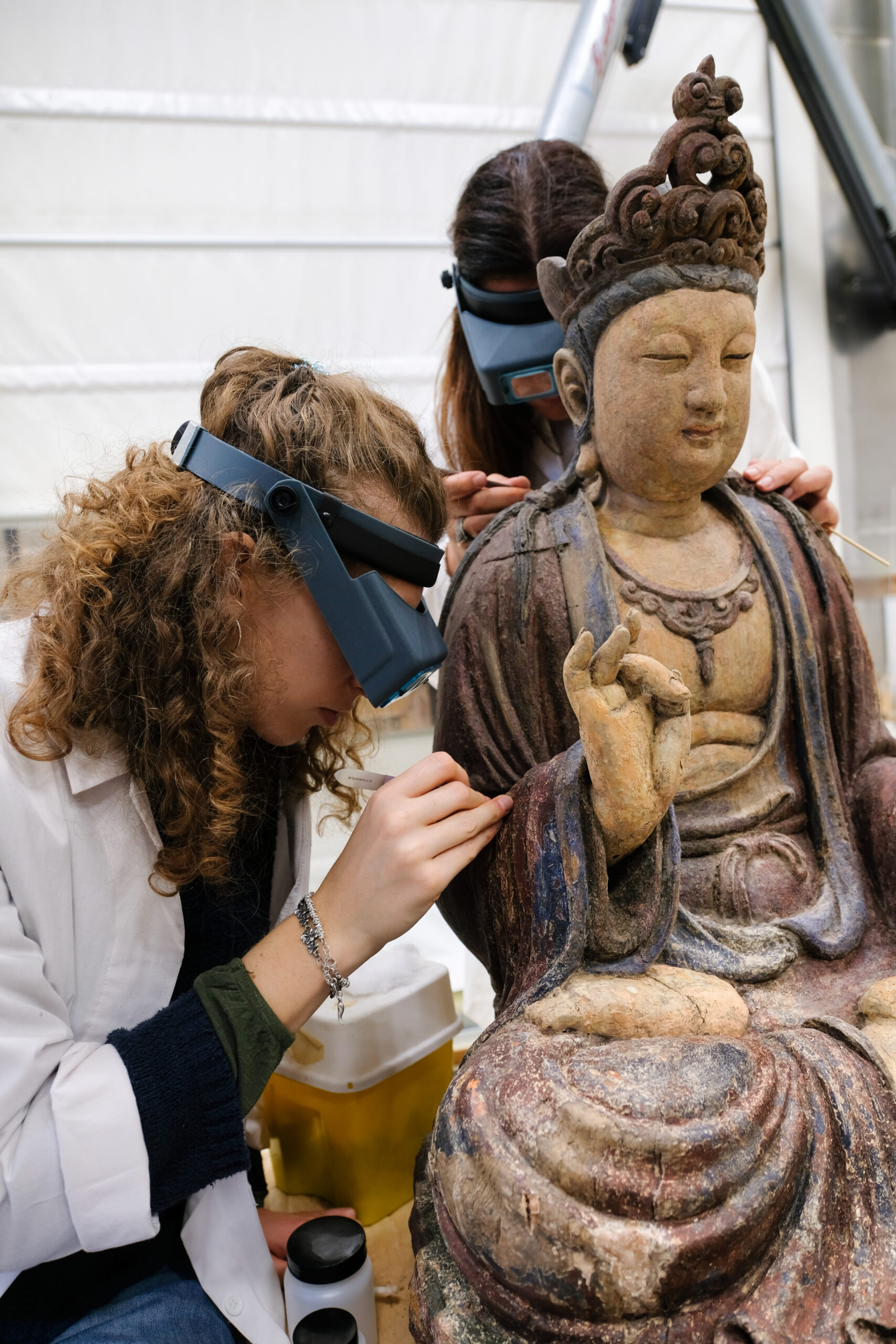
Buddhist visual and material cultures are often understood in relation to their circulation from India to the rest of Asia, while little attention has been paid to understanding their migration westward, although there are numerous examples preserved in public and private collections.
Most of the artefacts, coming from different geographical and cultural contexts of Asia, have travelled in Europe in recent centuries as a bargaining chip and within the art market, thus being completely decontextualised and losing all devotional value in favour of aesthetic ones, often adapted to Western taste to attract collectors.
The conservative intervention has maintained as a common thread the desire to return the most accurate knowledge of the artifacts, providing for a particularly thorough diagnostic campaign. The project, developed in collaboration with the Politecnico di Torino for the creation of a digital twin and with the Physics Department of the University of Turin for digital tomographic analysis, is to be considered work in progress It foresees a progressive integration of results.

 CCR and accessibility


