

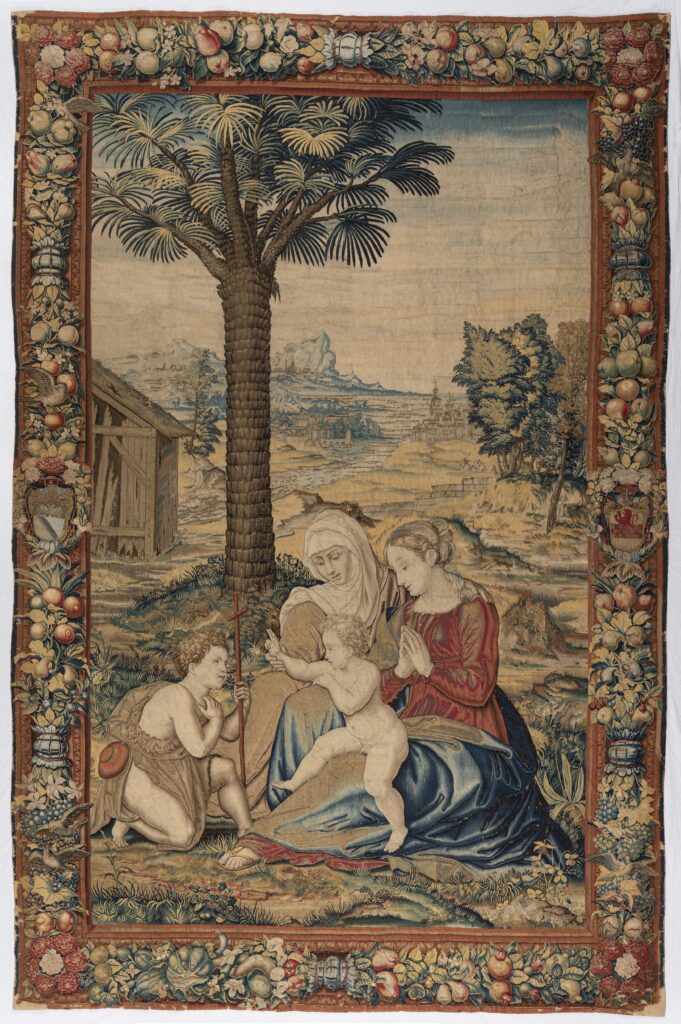
‘Blessing Tapestry’ or Our Lady of Divine Love (Madonna with Child Jesus, Saint Anne and Saint John), ante 1538
Manufacture in Brussels
On cardboard by Lambert Lombard, painter at the service of Erard de la Marck, cardinal of Liège and patron of the tapestry. The Lombard cardboard comes from the engraving of Marcantonio Raimondi, which reproduces with some variants the table of Raffaello Sanzio Our Lady of Divine Love kept at the National Museum of Capodimonte (Naples).
Brief description of the intervention
The tapestry Our Lady of Divine Love It is characterised by technical and material characteristics of the highest level, such as to confirm the area of excellence in which it was created.
From the point of view of material and visual integrity, the tapestry had the sacred group intact, while significant gaps affected the edges at the four corners and the vertical selvages.
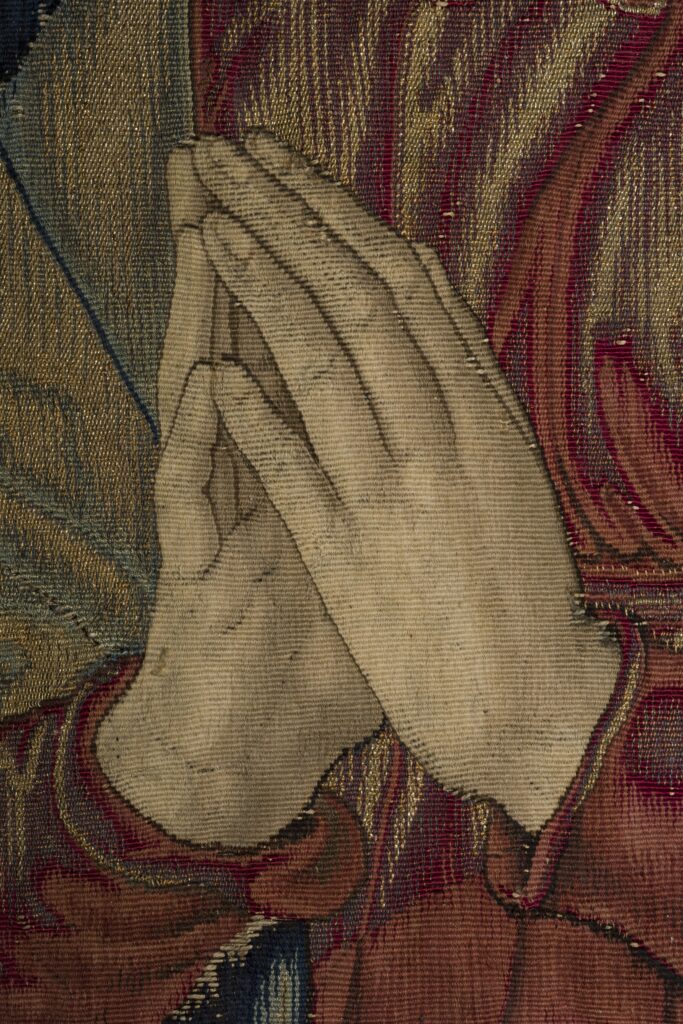
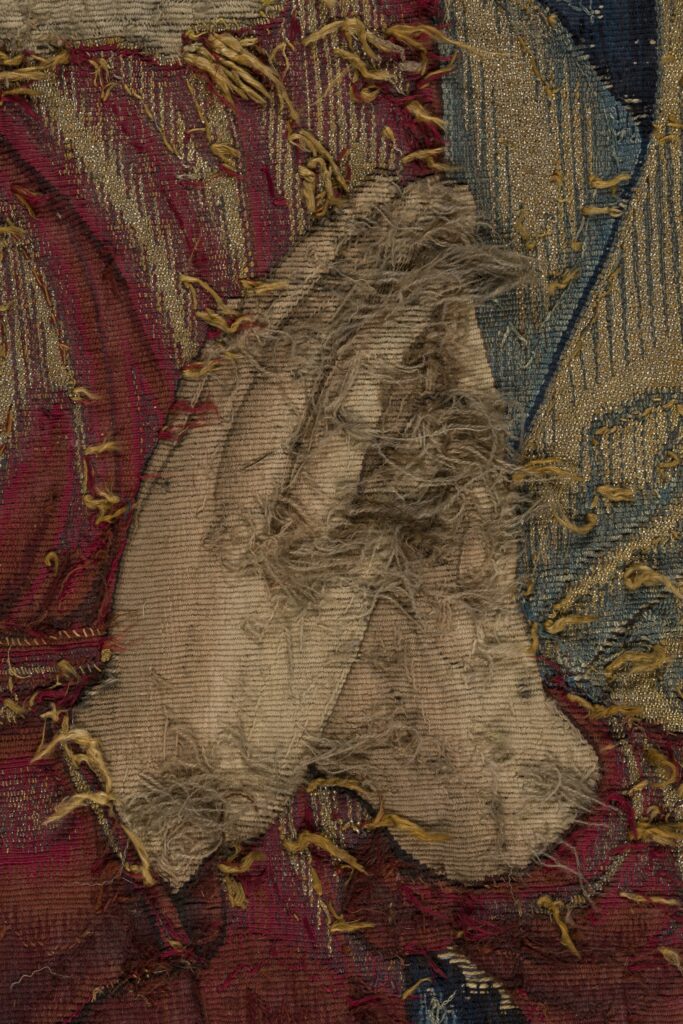
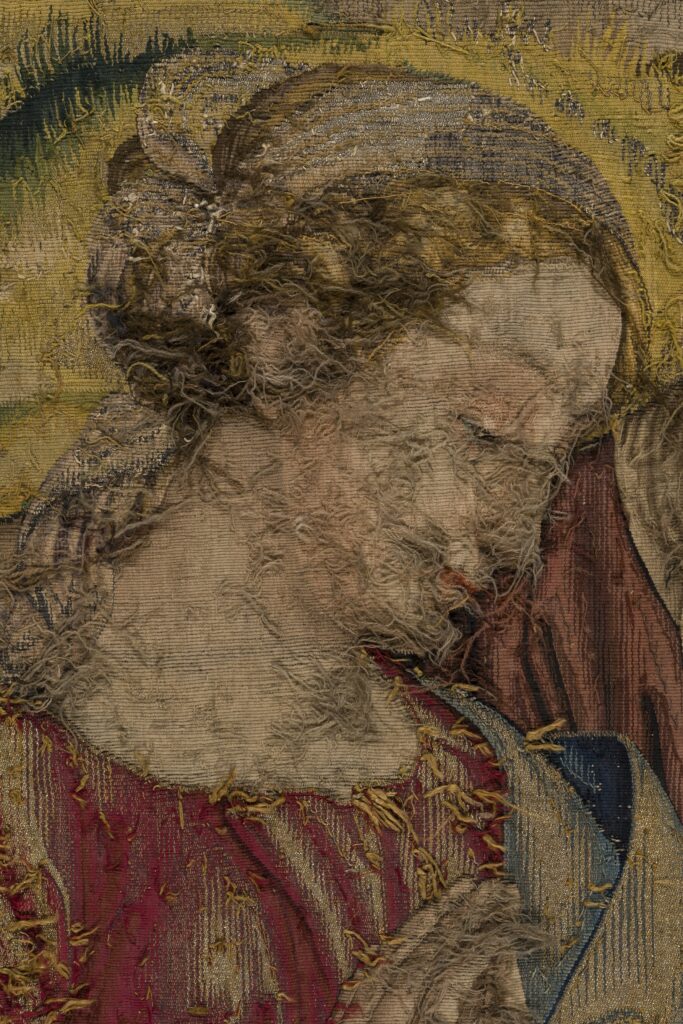
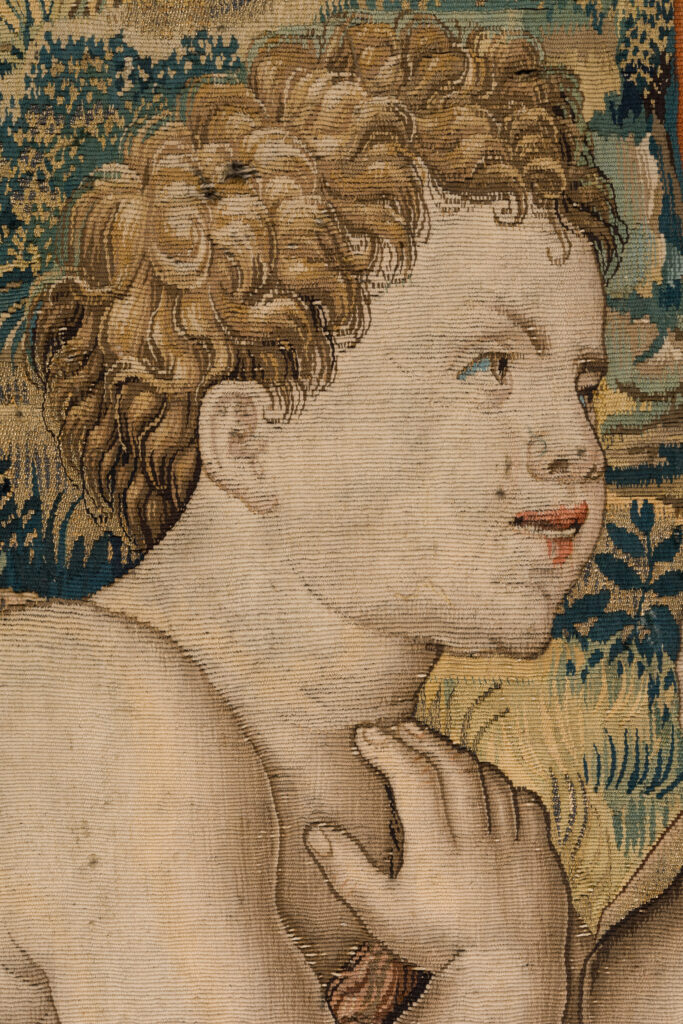
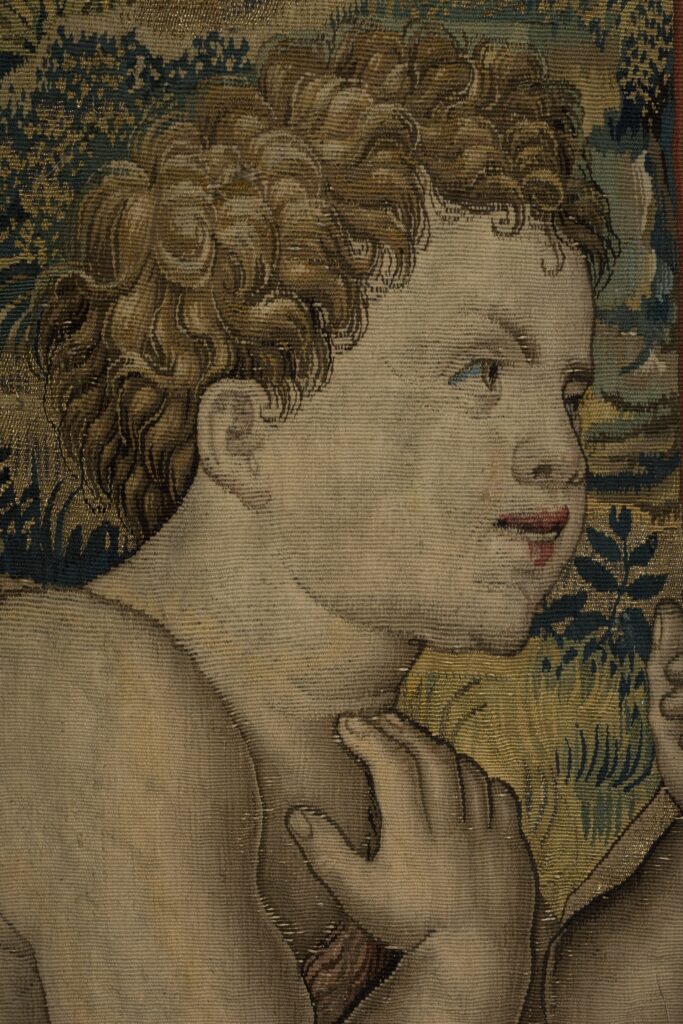
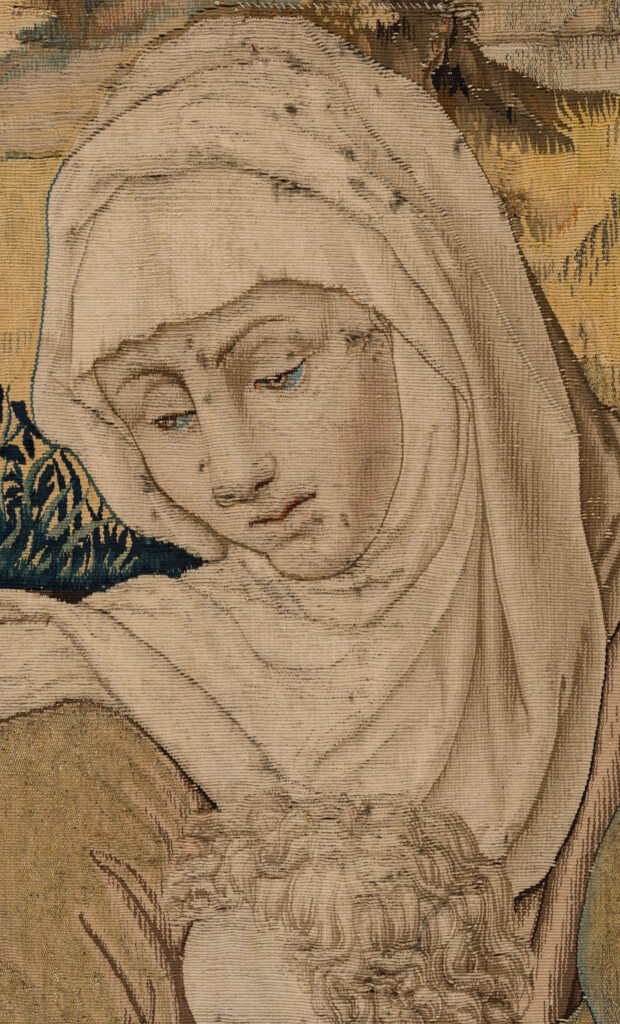
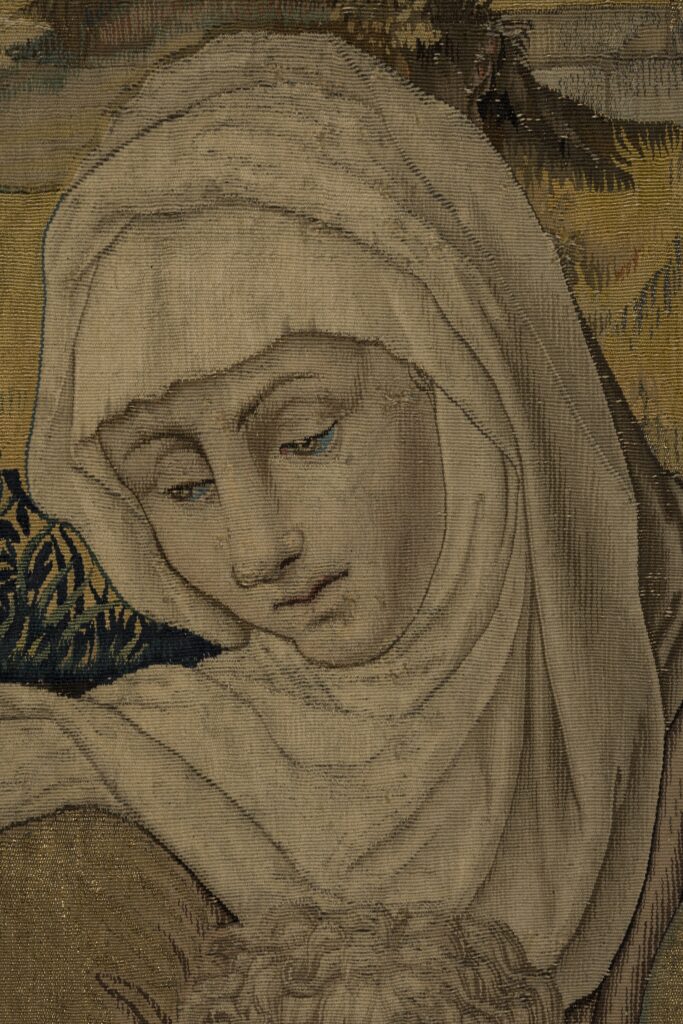
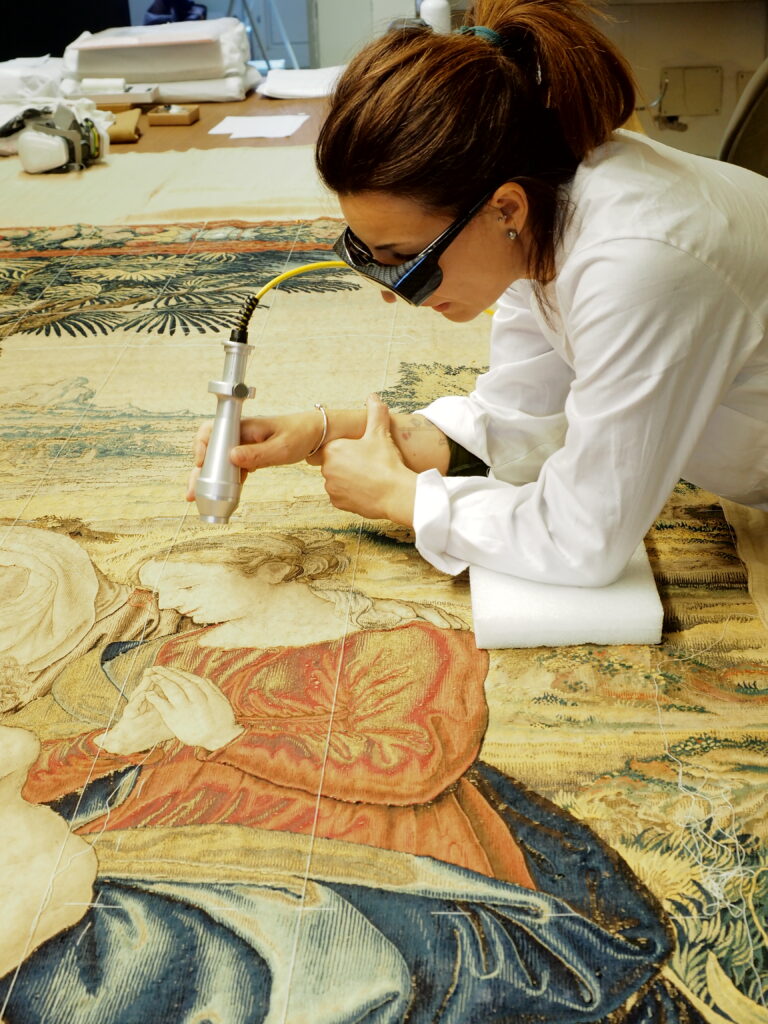
A particularly critical conservative, and at the same time aesthetic, was represented by widespread dark spots present on the incarnates, originating from the deposits of dust present inside the small holes in the weaving, caused by previous attack of moths. This problem was solved thanks to the punctual treatment of deposits by LASER cleaning, with the achievement of rewarding results for the recovery of the correct color values of the incarnates.
The material and visual integrity of the tapestry, combined with the awareness of working on an absolute masterpiece of the art of weaving, led to the adoption of the conservative method during the consolidation phase, in total respect for the originality of the artifact and the reversibility of the intervention.
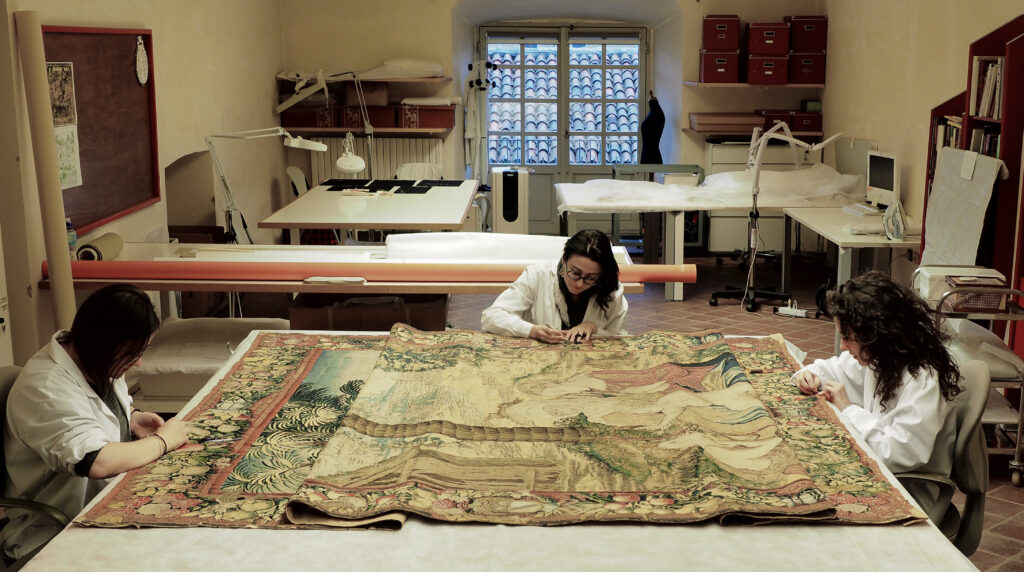
The conservative method, based on needle-shaped consolidation by means of stopping points on a support fabric applied to the back of the tapestry, allowed the stabilisation of the many degrades of the weaving, without the integration of the lost parts.
In fact, the possibility of using the supplementary method to restore the extensive gaps located at the four corners of the borders and along the vertical selvages that, folded below the non-original lining, were recovered on both sides, has been excluded, choosing to present them in their fragmentary state and in full respect of the originality of the work. Finally, for the future protection of the most fragile parts of the tapestry, vertical selvages in a fragmentary state were protected by the application of a neutral coloured tulle.

 CCR and accessibility


