

Two Indigenous-American Tissues
Peru, Chimu period (1000-1200 AD) and Chancay period (1300 AD)
Brief description of the intervention
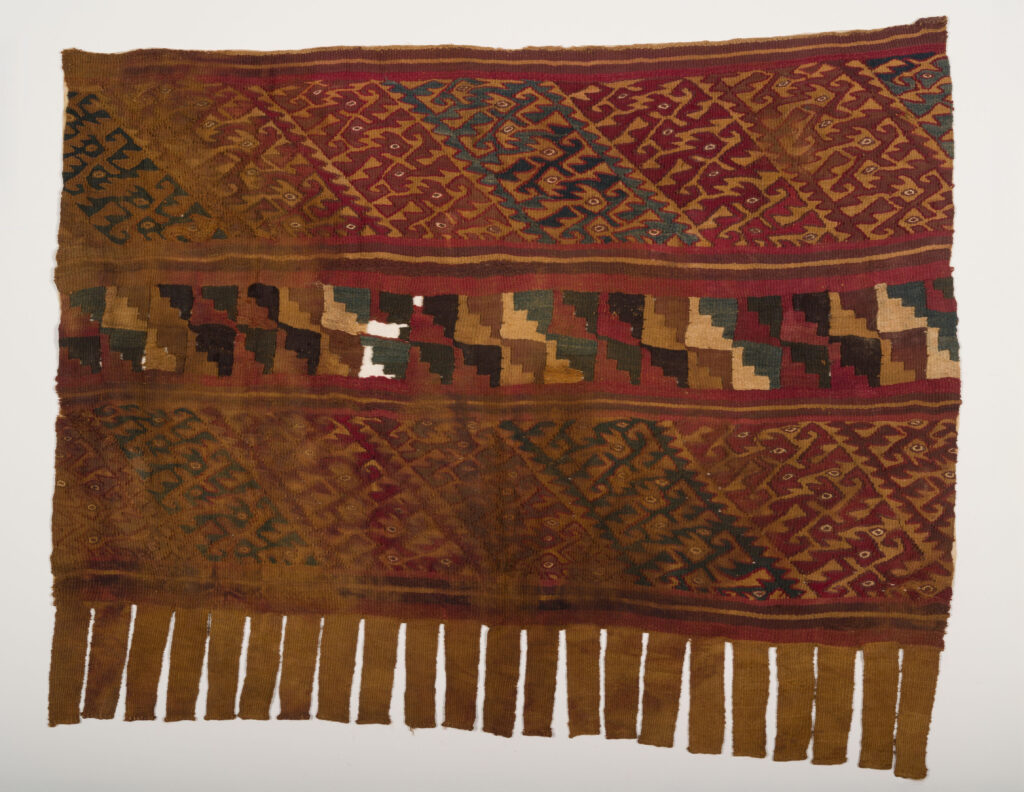
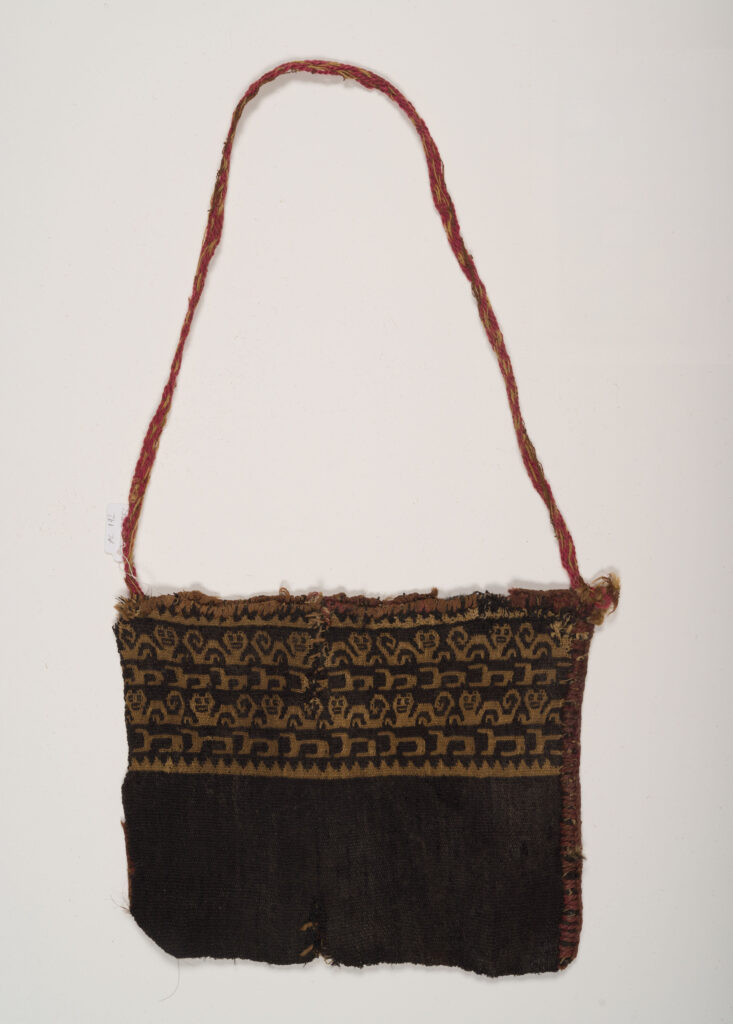
The two indigenous-American archaeological artefacts belonging to the textile collection of Seth Siegelaub, now donated to the Antonio Ratti Foundation in Como, are testimony to the complex and varied universe of pre-Hispanic textile production, evaluated as one of the most prolific productive and creative activities on the South American continent. This complexity makes the ancient Peruvian fabrics a basin of great scientific interest for the study, conservation and enhancement of archaeological and ethnographic textiles.
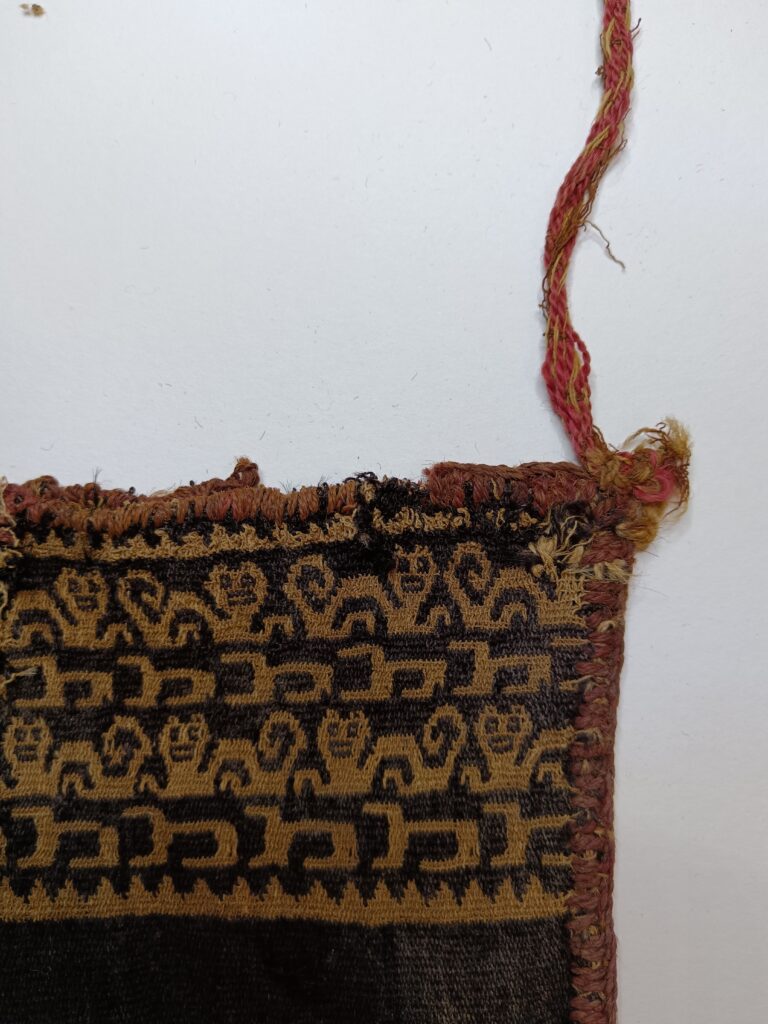
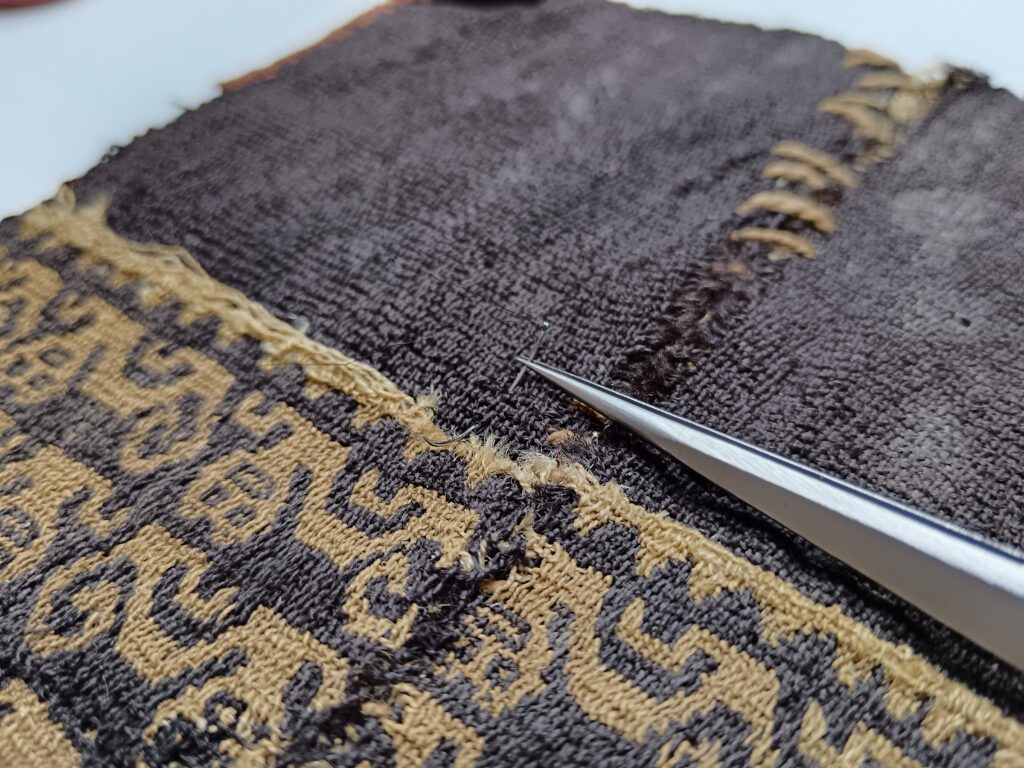
The fringed fabric with a decorative function and the small bag, a container of coca leaves, arrived in the JRC laboratories in 2024, with conservative problems resulting from a marked degradation of the textile weave, which, although complete with all its parts, is characterised by a serious fragility of the fibres.
The solutions adopted, by comparing the data from the observation of the artefacts with the historical-stylistic information and the results obtained from the diagnostic surveys, have made it possible to bring indigenous-American tissues back into a stable conservative situation and to obtain a correct recovery of the material and formal values in accordance with their function of use.
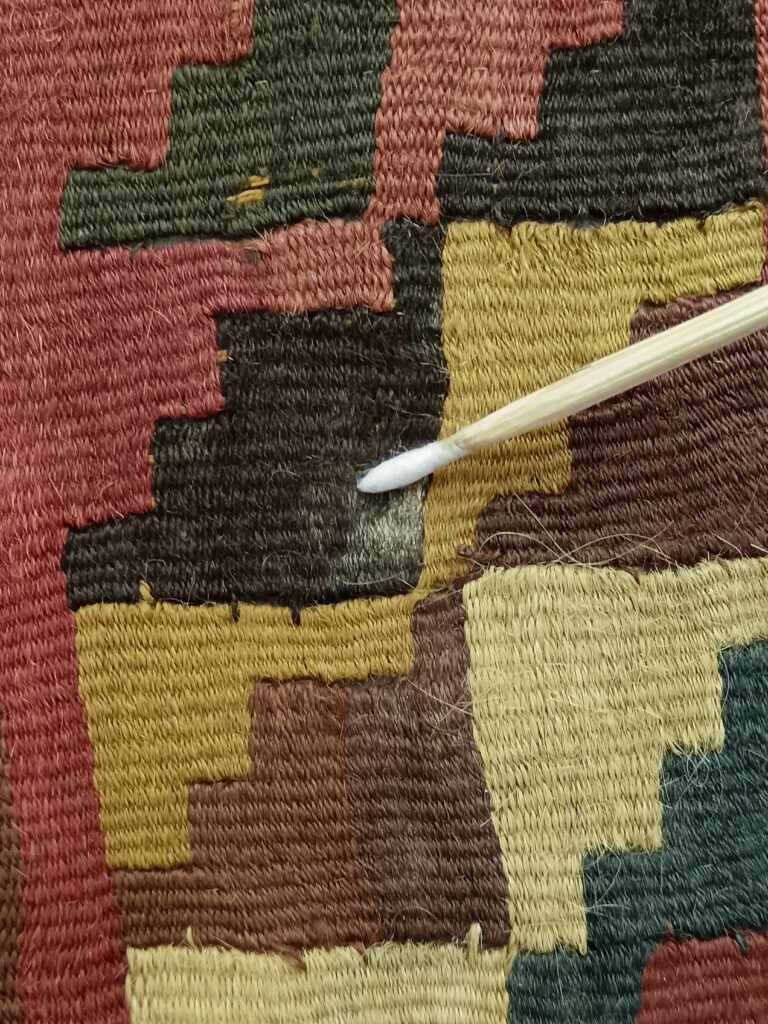
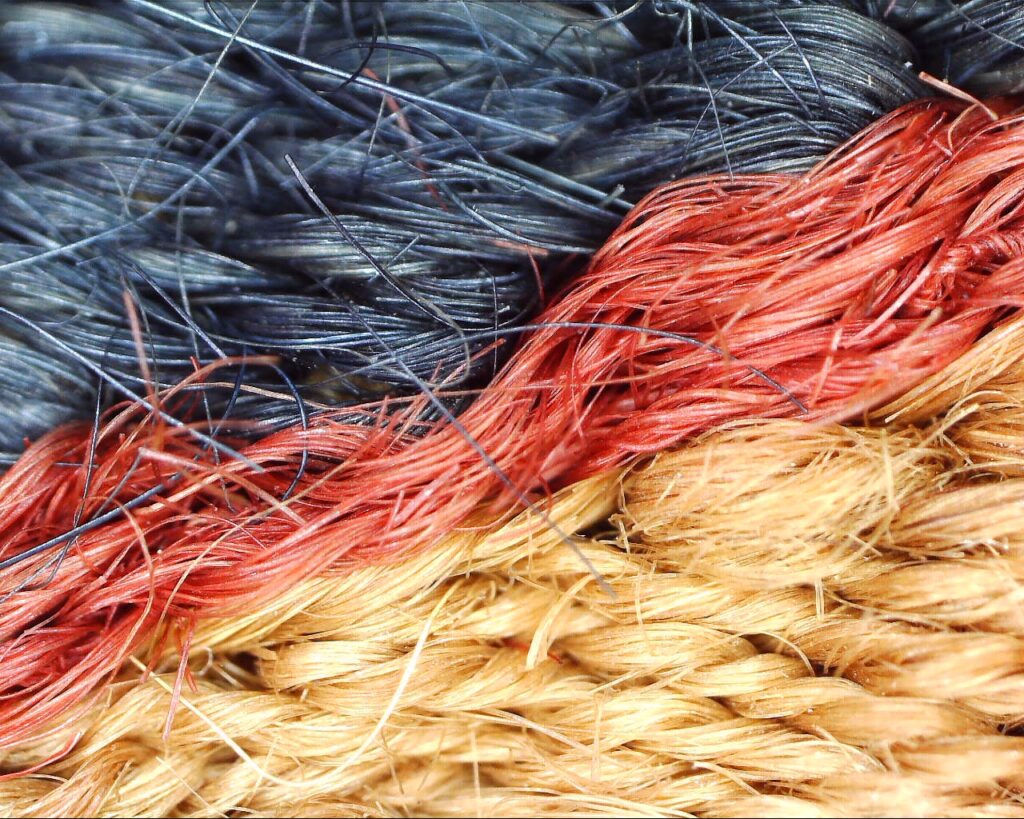
A thorough study of the textile surface preceded the physical cleaning phase and the localized treatment of punctual deposits with a previously tested hydroalcoholic solution.
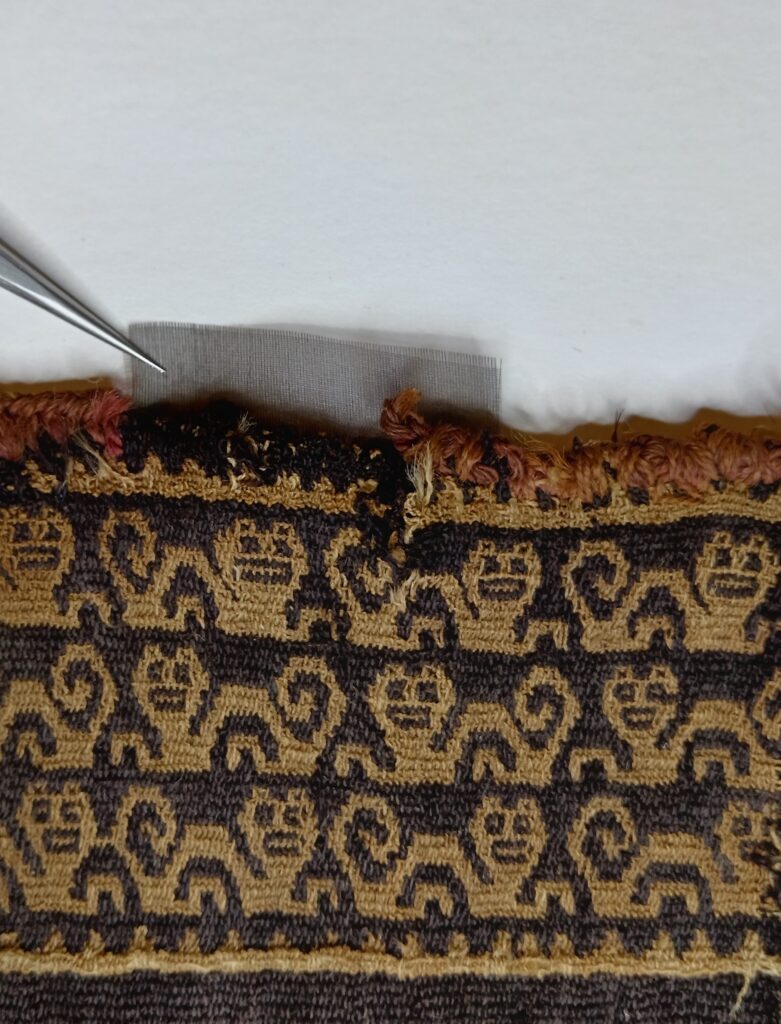
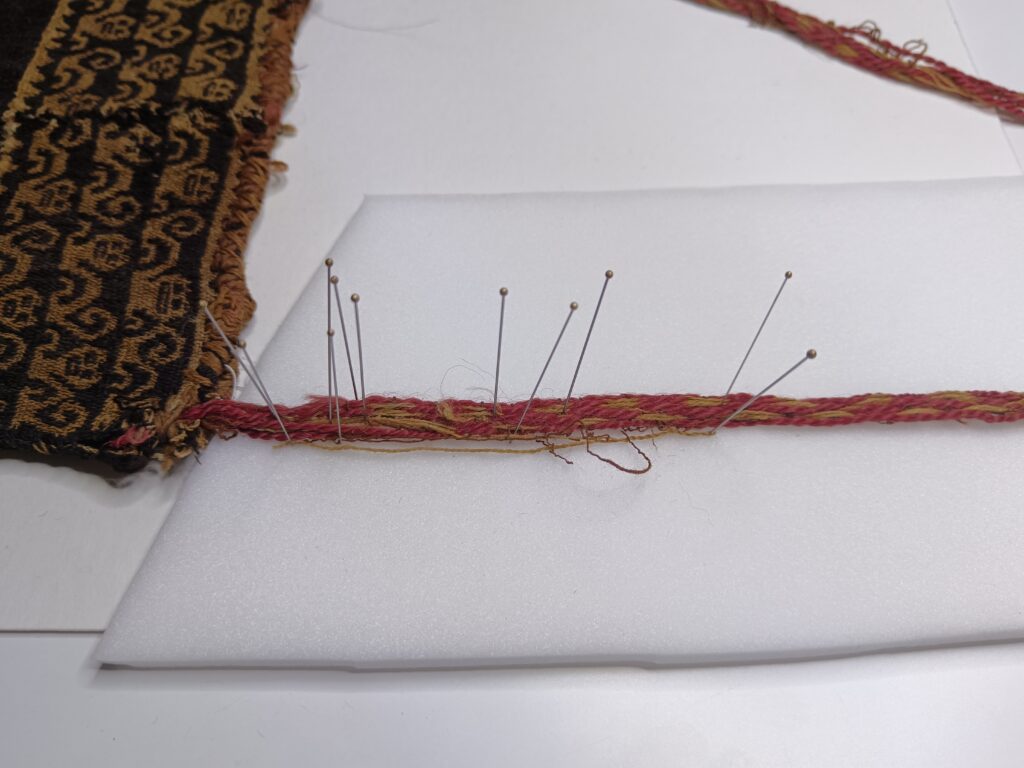
The typology and distribution of the points of conservative consolidation have been studied to recover the orthogonality of the weave in areas with loss of cohesion and block the progress of degradation.
The artefacts have been made autonomous and free from any exhibition system and, in compliance with their technical characteristics and three-dimensionality, made completely inspectable, in a new form of usability thanks to the use of dyed silk veil supports. This solution is in line with the JRC's method choices, which prefers a conservative approach to the restoration of archaeological and ethnographic artefacts.
To complete the project, on the occasion of the study day ‘Open archive: pre-Columbian fabrics and natural dyes. A narrative between restoration, dyeing techniques and meaning’ organised by the Ratti Foundation on 21 September 2024, the working group presented the study and restoration work with the contribution of: Restoring Seth's textile collection: a multidisciplinary dialogue between conservation, research and new forms of usability for ethnographic tissues.

 CCR and accessibility


