

Mummy from the North Necropolis of Gebelein (Upper Egypt)
Ancient Kingdom, 4th Dynasty (2600-2400 BC)
Brief description of the intervention
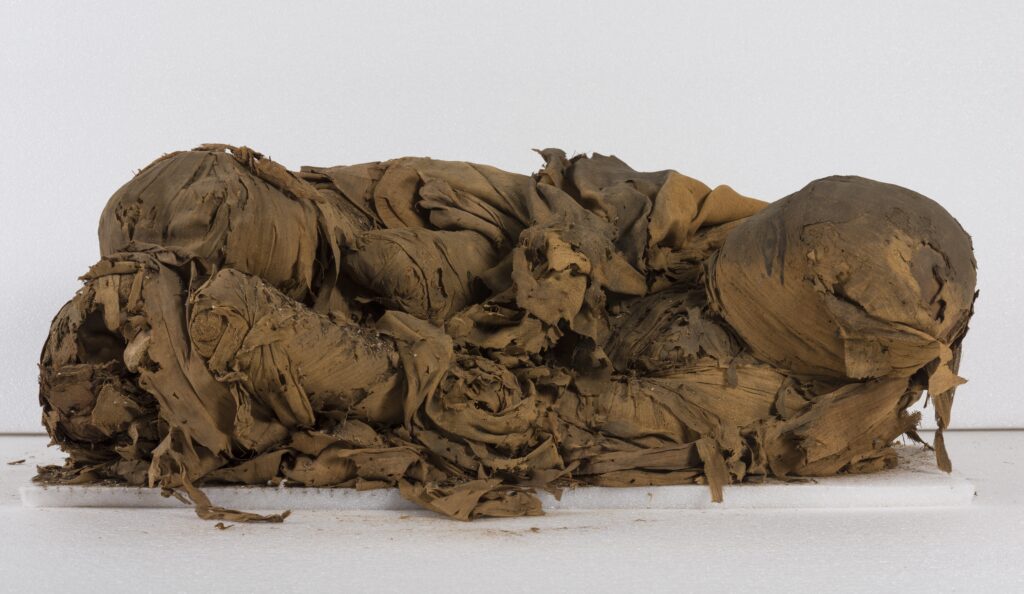
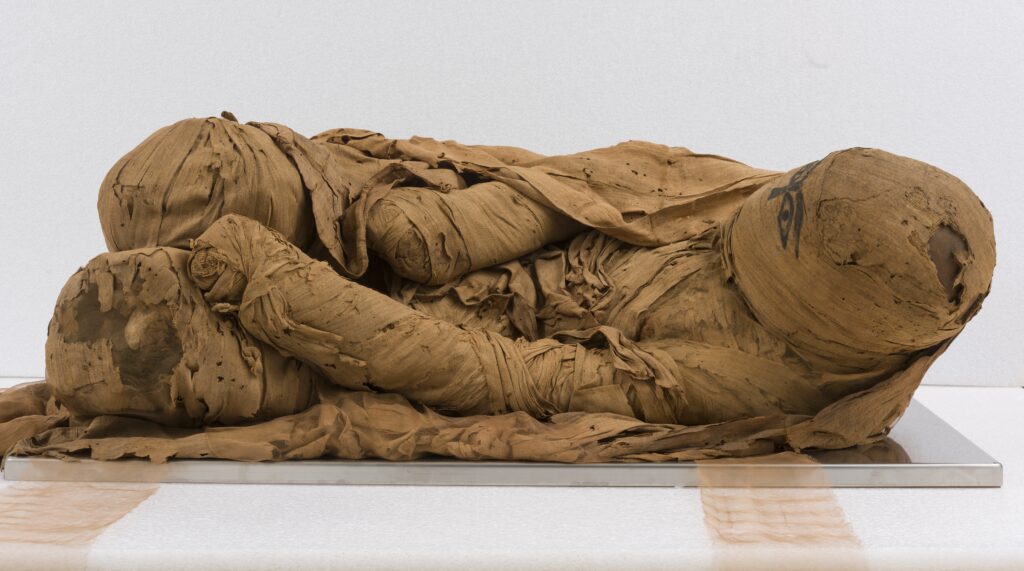
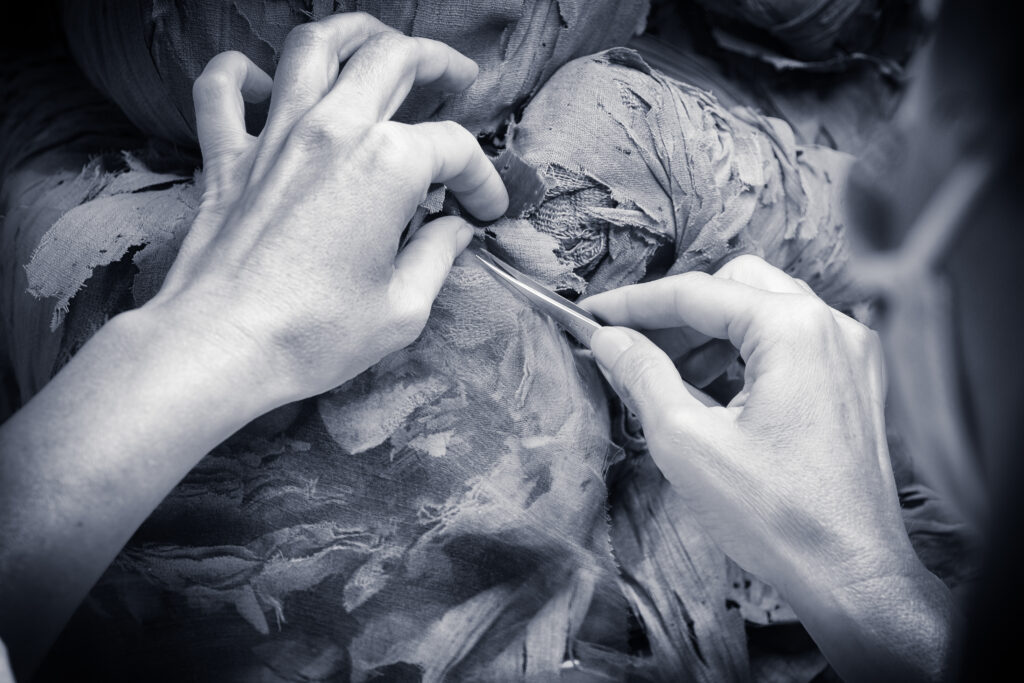
The mummified human body appears in a curled-up position with blindfolded limbs and facial details (eyebrows, eyes and nose) painted on the bandages. The ambitious objective of the restoration, in addition to the return to the public of a find of great documentary value, was to respond both to the need for conservation of the original materials and to the theme of ethical respect for the mummified human body.
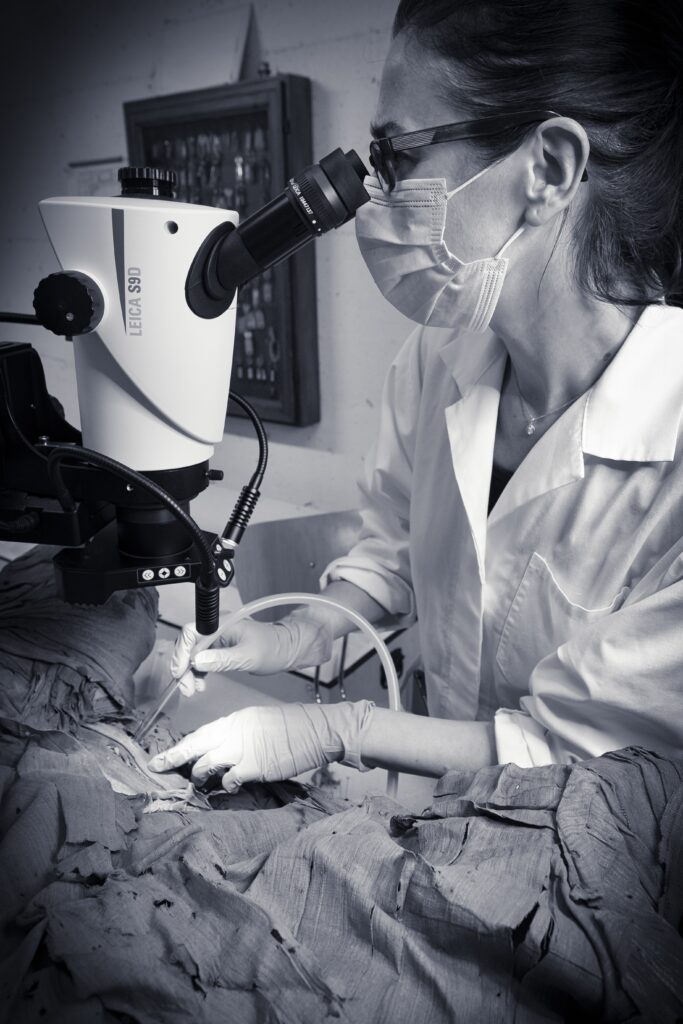
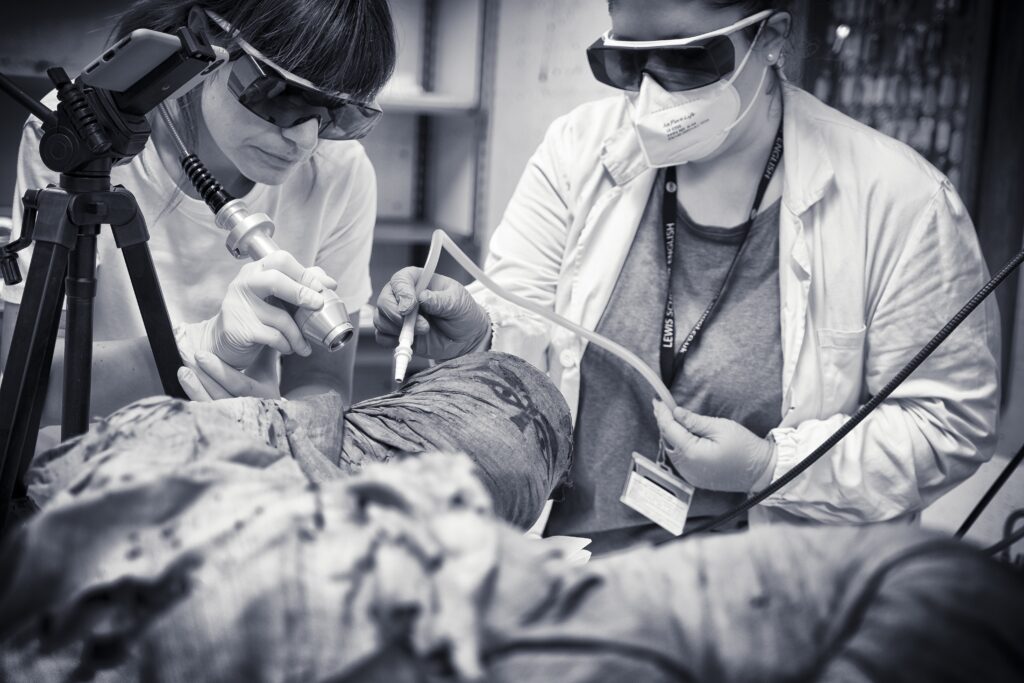
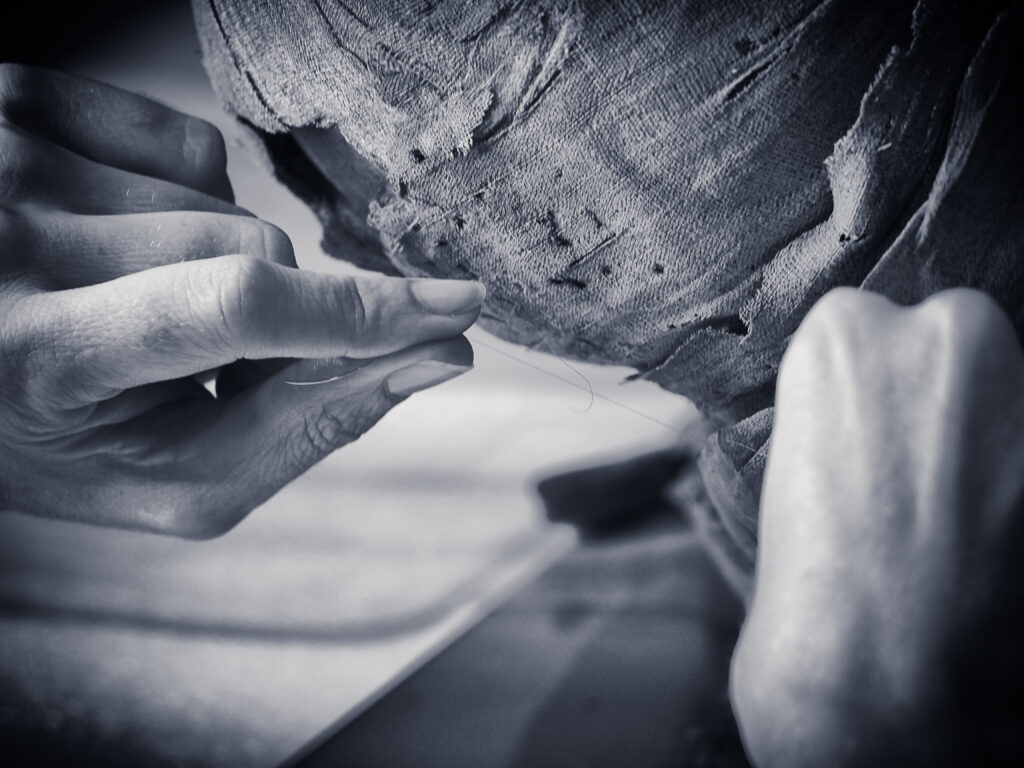
The mummy, in fact, represents a rarity for the state of preservation of its complex textile stratigraphy and for the finds of considerable documentary value arrived from its funeral equipment. All the restoration choices, from cleaning to consolidation, required a reflection on the minimum intervention intended as a critical evaluation of the less invasive methods, in full respect of the organic materials to be maintained and preserved from future degradation. Thanks to the synergy of two methods (the traditional one using micro-suction combined with the LASER methodology), the cleaning intervention allowed the controlled removal of the deposits that made the details of the face painted on the bandages illegible. The subsequent phases have imposed a methodological reflection on the minimum intervention intended as a critical choice of the least invasive methods, in full respect of the archaeological materials to be kept in the state in which they arrive. All the textile consolidation was therefore based on the possibility of containing and stabilizing the degrades thanks to the coverage of the lacunous areas and in a state of fragility with a transparent silk veil and specially dyed in harmony with the color of ancient linen.
Finally, the study day “Conserve and restore human remains. An Egyptian find from the Museum of Anthropology and Ethnography of the University of Turin’ organised in September 2024 at the Academy of Sciences in Turin, it was an opportunity to return the fascinating path of historical and biological knowledge of the find and, last but not least, the collective thinking behind the protocol that guided the restoration work: restorers, archaeologists, anthropologists, doctors and diagnosticians worked in synergy developing a critical approach that paid particular attention to ethical issues related to the handling, conservation and exposure of human remains. Restoration has thus combined knowledge and preservation of materials with an ethical approach based on respect for the mummified human body, recognised as both material and symbolic evidence of the extensive system of relations and values of Ancient Egypt.
Bibliography
E. Fiore Marochetti, R. Boano, B. Demarchi, C. Spiteri, A. Sciatti, C. Pennacini, R. Genta, A. Piccirillo, C. Oliva, G. Mangiapane, Ancient human biological evidence from the Museum of Anthropology and Ethnography of the University of Turin. A multidisciplinary dialogue between protection, research and new forms of usability, in V. Acconcia, P.F. Rossi (eds.), One year after the Guidelines for the Treatment of Human Remains, Rome, 5 July 2023, in ‘Bollettino di Archeologia Online – BAO’, Supplement 2, 2024, Year XV. DOI: 10.60978/BAO_XV_Suppl_02_03
R. Boano, E. Fiore Marochetti.,G. Mangiapane, M.W. Dee, R. Genta, F. Zenucchini, A. Piccirillo, B. Demarchi, Funerary practices in Old Kingdom Egypt revealed through a cross-disciplinary study of a mummy with painted bandages from Gebelein (Upper Egypt), in “Archaeological and Anthropological Sciences”, currently in print.

 CCR and accessibility


