

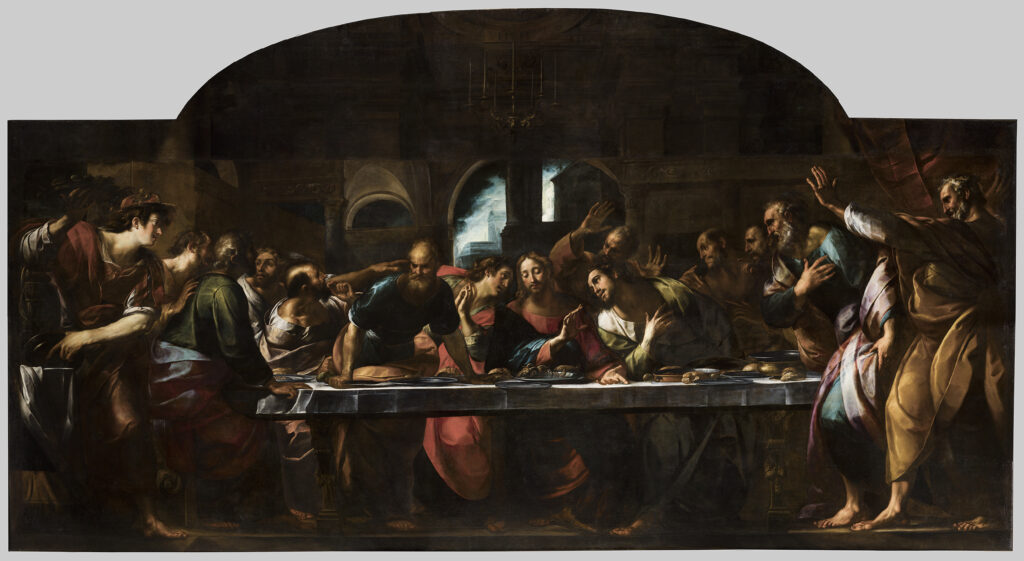
The Last Supper, 1618
Giulio Cesare Procaccini
Brief description of the interventions
The painting had been removed urgently from the counter-façade of the Genoese church because there had been a dangerous detachment of the lining canvas: it arrived at the Centre in 2014 and left the laboratories at the end of 2017 to be exhibited at the Gallerie d’Italia in Milan in the exhibition “The last Caravaggio. Heirs and new masters’.
The intervention was entrusted to the Centre by the Soprintendenza Archeologia Belle Arti e Paesaggio per la Città Metropolitana di Genova and was carried out in synergy with the University of Turin and with the support of Compagnia di San Paolo, Intesa Sanpaolo and the Soprintendenza Genovese itself.
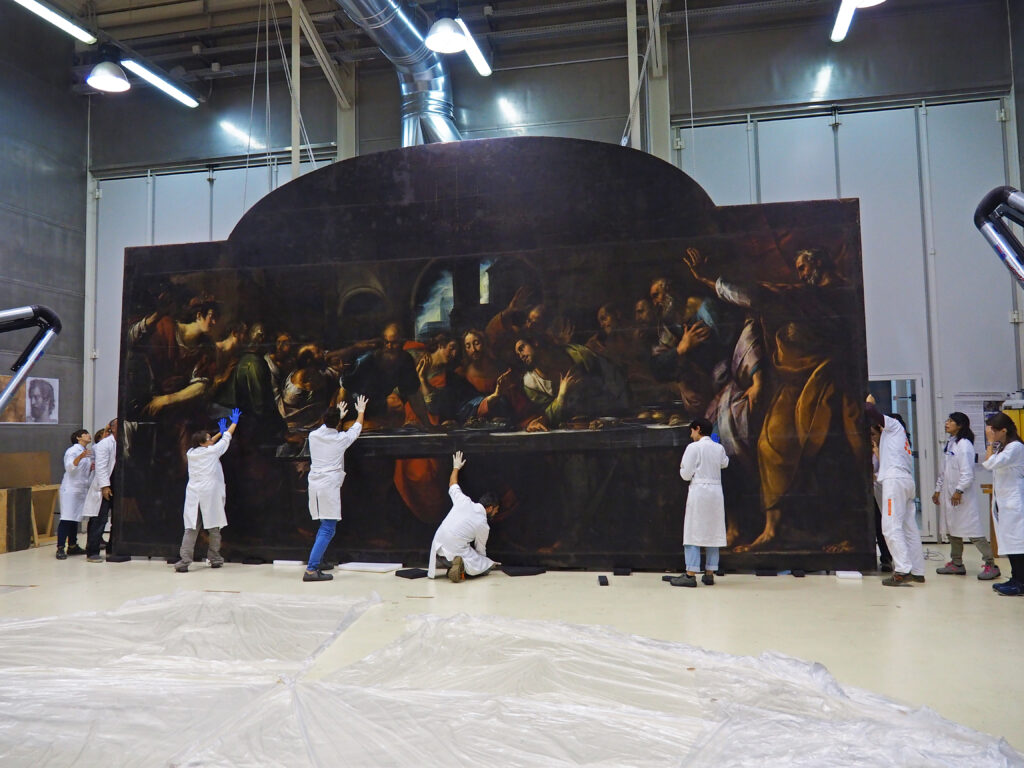
The large canvas (8.55 x 4.90 meters) was commissioned around 1618 by Father Gerolamo da Nervi for the refectory of the Franciscan convent adjacent to the Basilica of the Santissima Annunziata del Vastato in Genoa, where it remained until 1686 when, for decorative adjustments of the church, it was transferred to the counter-façade and inserted into a niche with a centinated format. A few years after its execution, the canvas underwent important changes, the format changed from rectangular to a centinate shape, with enlargements along all four margins. The portion added in 1686 integrates the representation with architectural elements that do not fit seamlessly with respect to the original scene.
The work has been affected over the centuries by various structural interventions, such as linings and tensions, and has come to us with a synthetic lining and an aluminium frame with ‘automatic expansion’ (Rigamonti) attributable to the intervention carried out in 1990-92.
The intervention on the painting and the cognitive analyses carried out made it possible to study the pictorial technique and to retrace the executive process, with the numerous compositional changes that characterize the creative process typical of this artist.
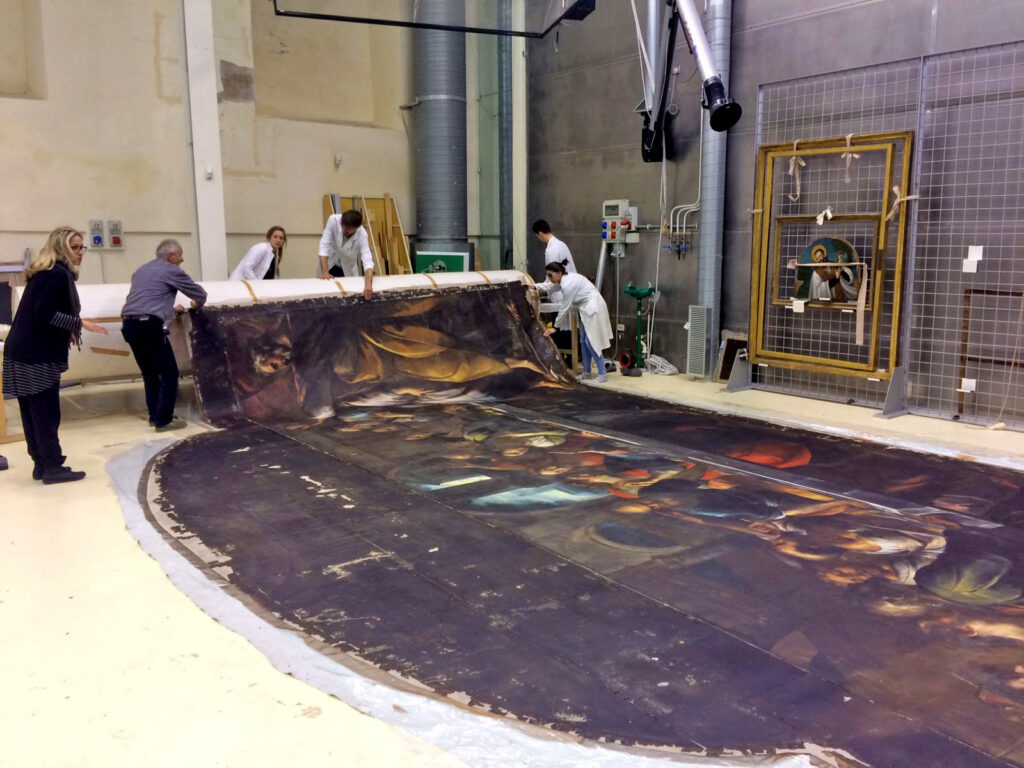
The most important problems were borne by the support that had numerous detachments from the support liner. Despite the recent restoration (1990-92), the canvas again showed numerous deformations and showy detachments so as to have the upper right corner completely unlined and folded down.
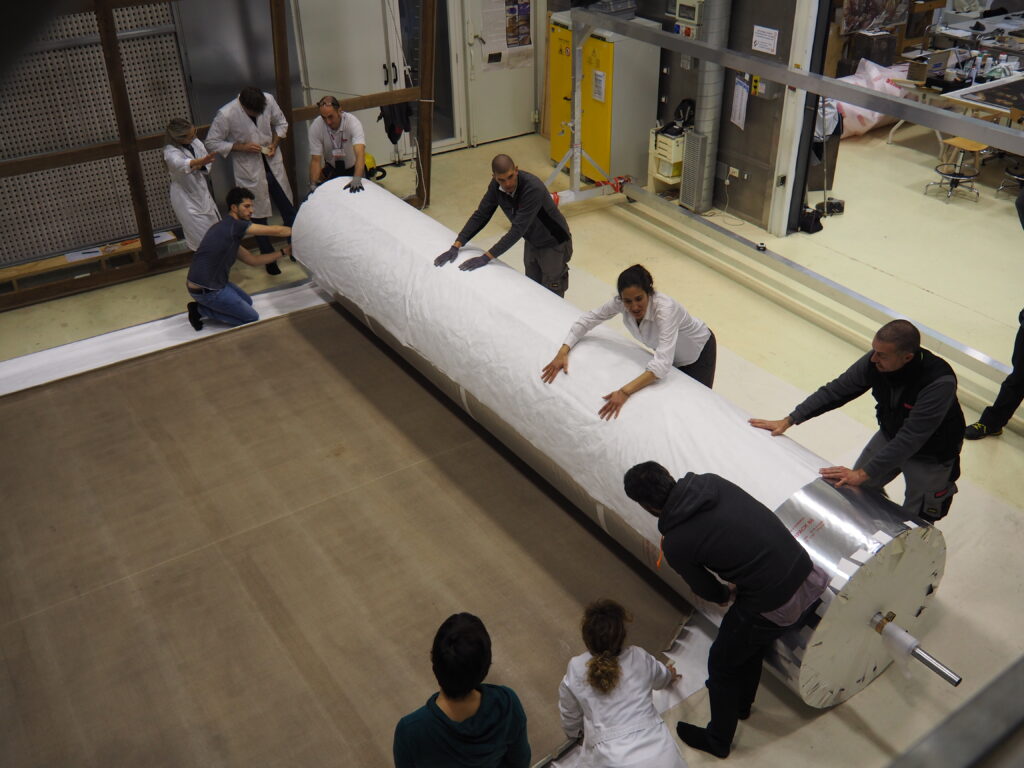
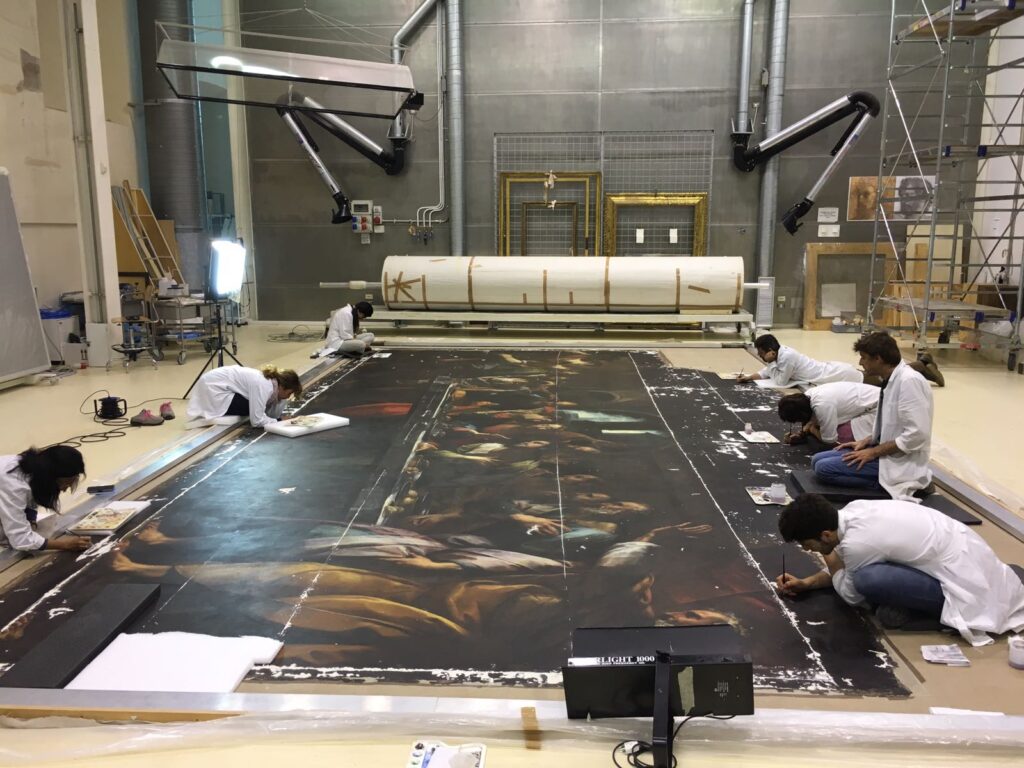
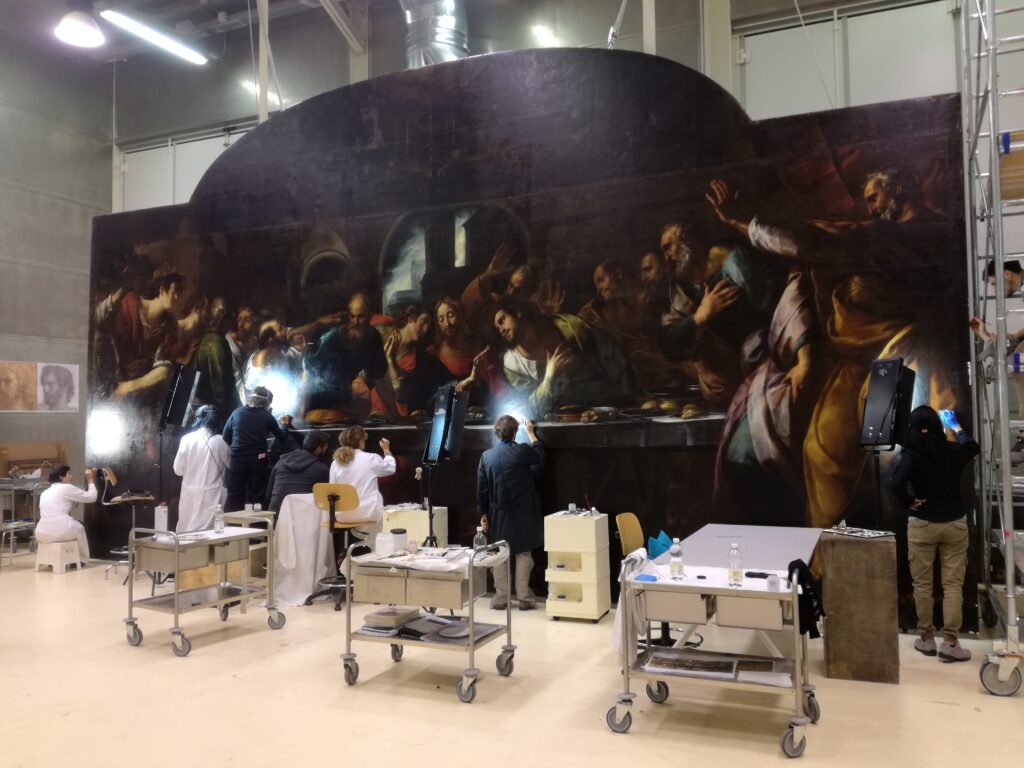
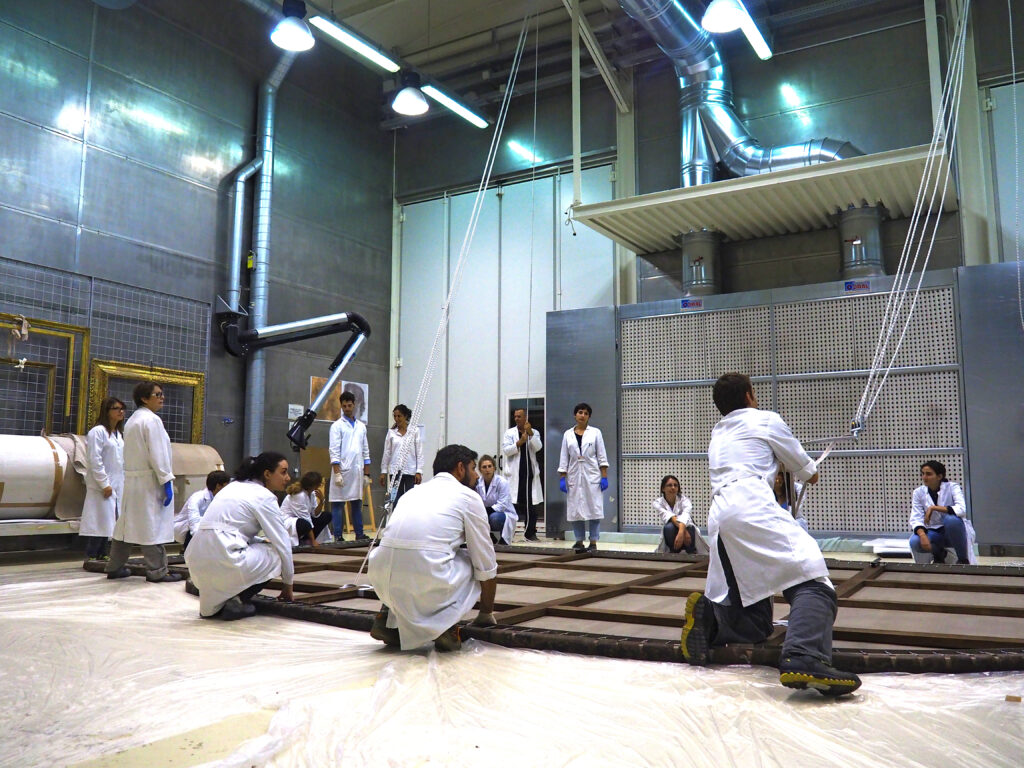
Dealing with a restoration on a large painting makes it difficult to manage each operation, even the simple photographic documentation. In this case it was necessary to define punctually the operational succession of all the phases and provide necessary materials and equipment, involving many restorers in a great teamwork.
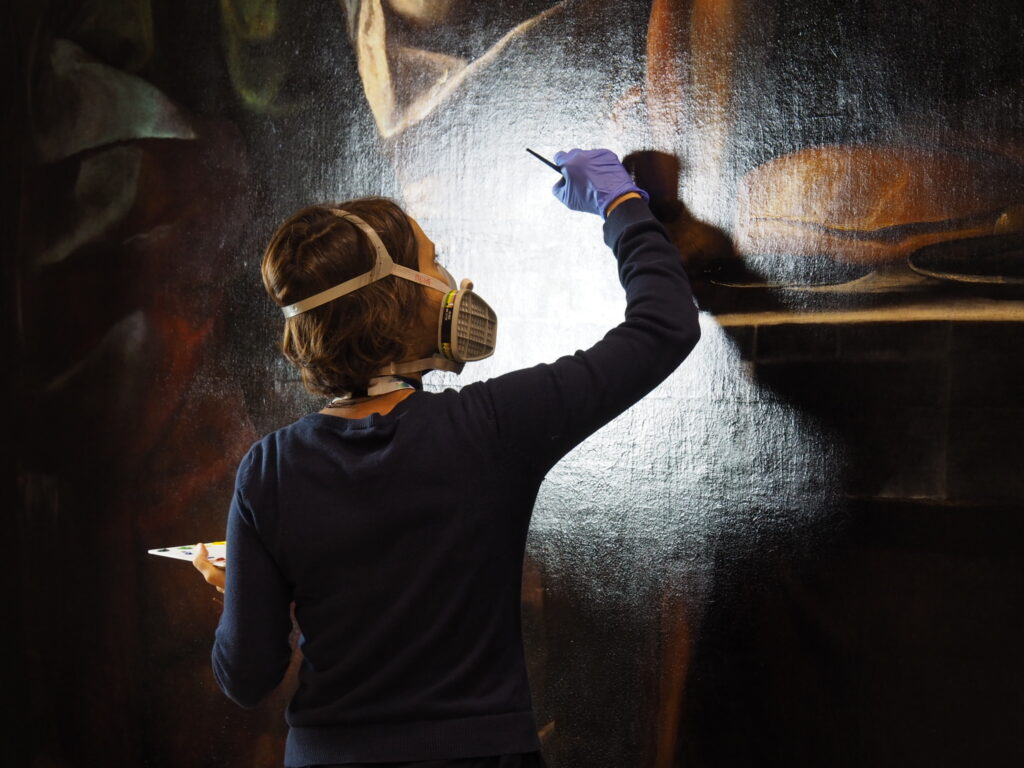
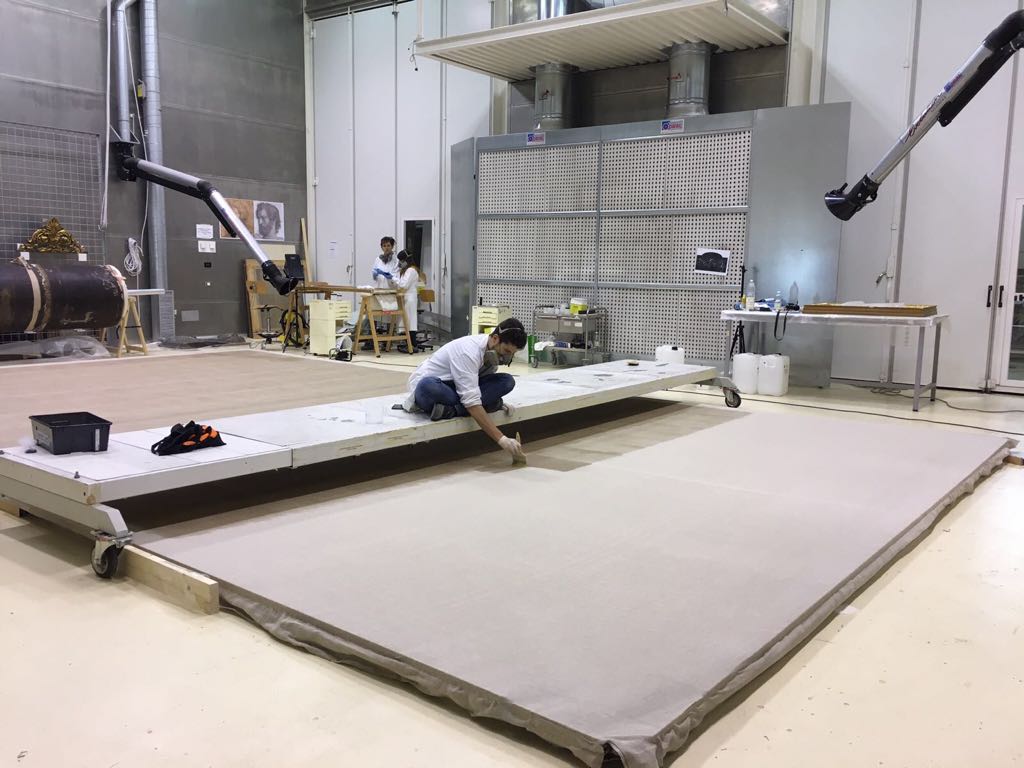
The long restoration work (2014-2017) involved both structural aspects (with removal of the adhesive, structural restoration, new lining and new constant and controlled tensioning) and aesthetic restoration (through cleaning, grouting, colour integration and painting).
The necessary comparison with interventions and products used in relatively recent times has been a valuable opportunity to assess the effectiveness of contemporary restoration materials and methods, study their effects and develop solutions for appropriate removal.

 CCR and accessibility


